Venice, Endless Bridges to Cross
Is it already starting? I wonder as I step out of the station and see the water downstairs rippling in gentle waves. Without warning, without any introduction, just like that: my first canal. It flows majestically through the darkness, dimly lit by an unattractive white lantern light, lined on the opposite bank by stately houses. It is the Grand Canal. I treat myself to a few minutes’ rest, standing right in the middle of the path, with so-called ant people scurrying about here and there, and after the twelve-hour journey I stretch my limbs in every direction. I am an octopus. An octopus in Venice. Buonanotte, Your Most Serene Highness[1].
After an extra ten-minute walk, I reach my accommodation in a convent, settle into my room and fall into a deep sleep, from which I am woken early the next morning by a flock of seagulls cawing joyfully. A glance out of the window: Patina. The nuns prepare breakfast, serving bread rolls, cheese and sausage. There are no fruits or vegetables, but three different cakes and a variety of specialities from the coffee machine. I drink two cappuccini every morning and look forward to the start of the day all over again. For alongside food and drink, I’m also taking a stroll through Venice’s history, as recounted by my travel guide:
… how Venice was founded on the water in the 5th century,
… how the city rose to become a maritime power in the Middle Ages,
… how the doges guided the fortunes of the state,
… how the Republic fell in 1797.
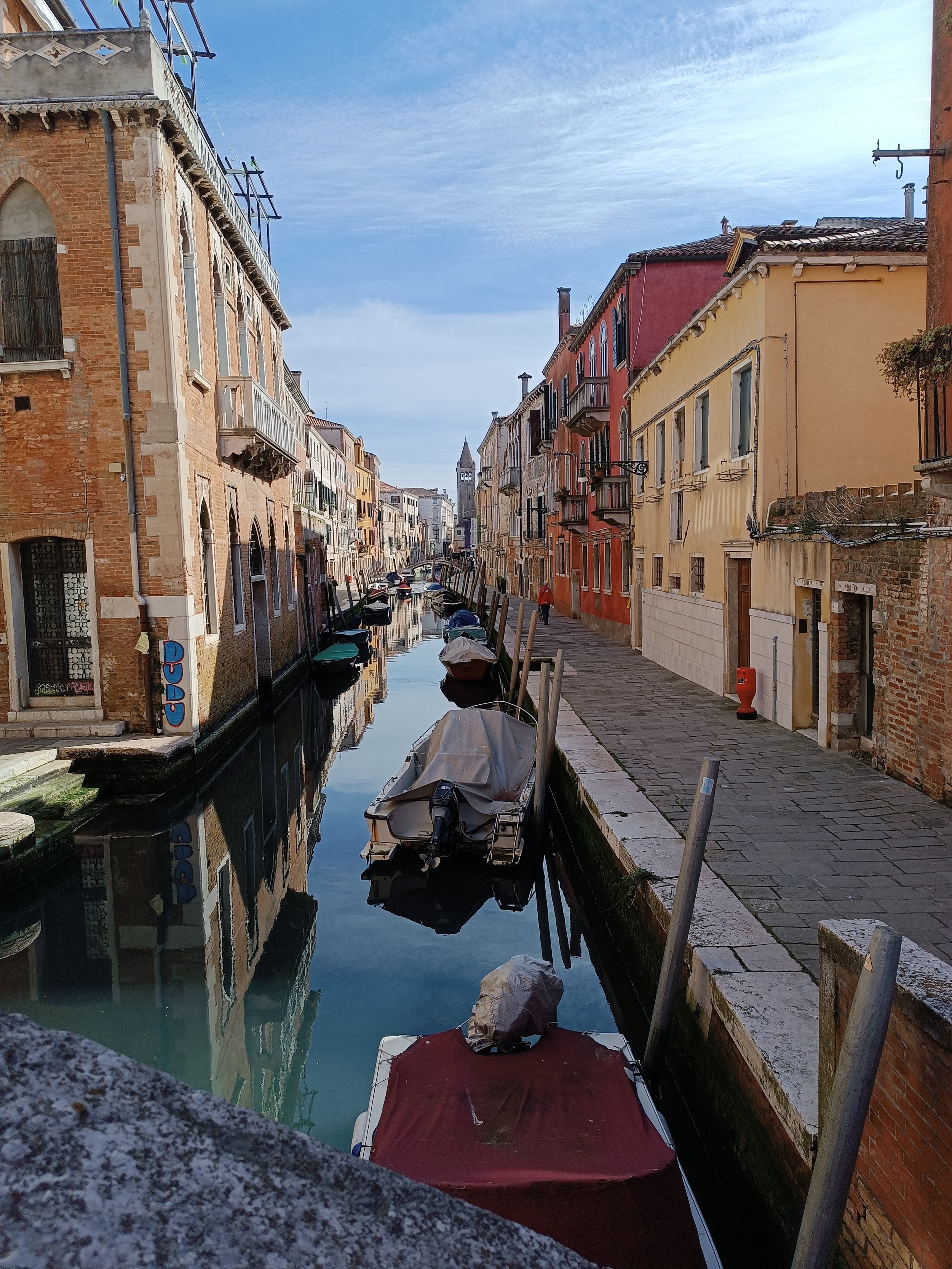
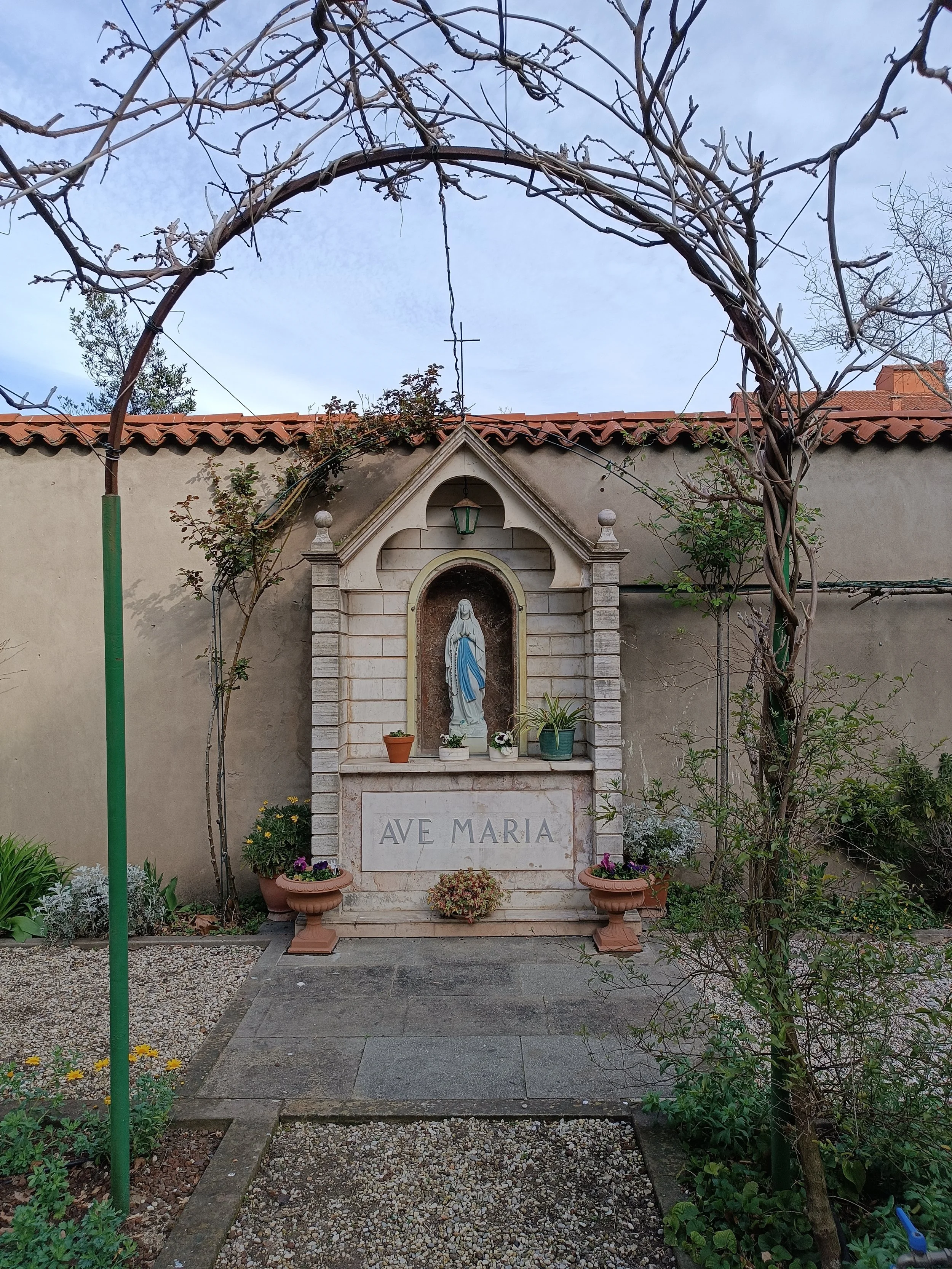
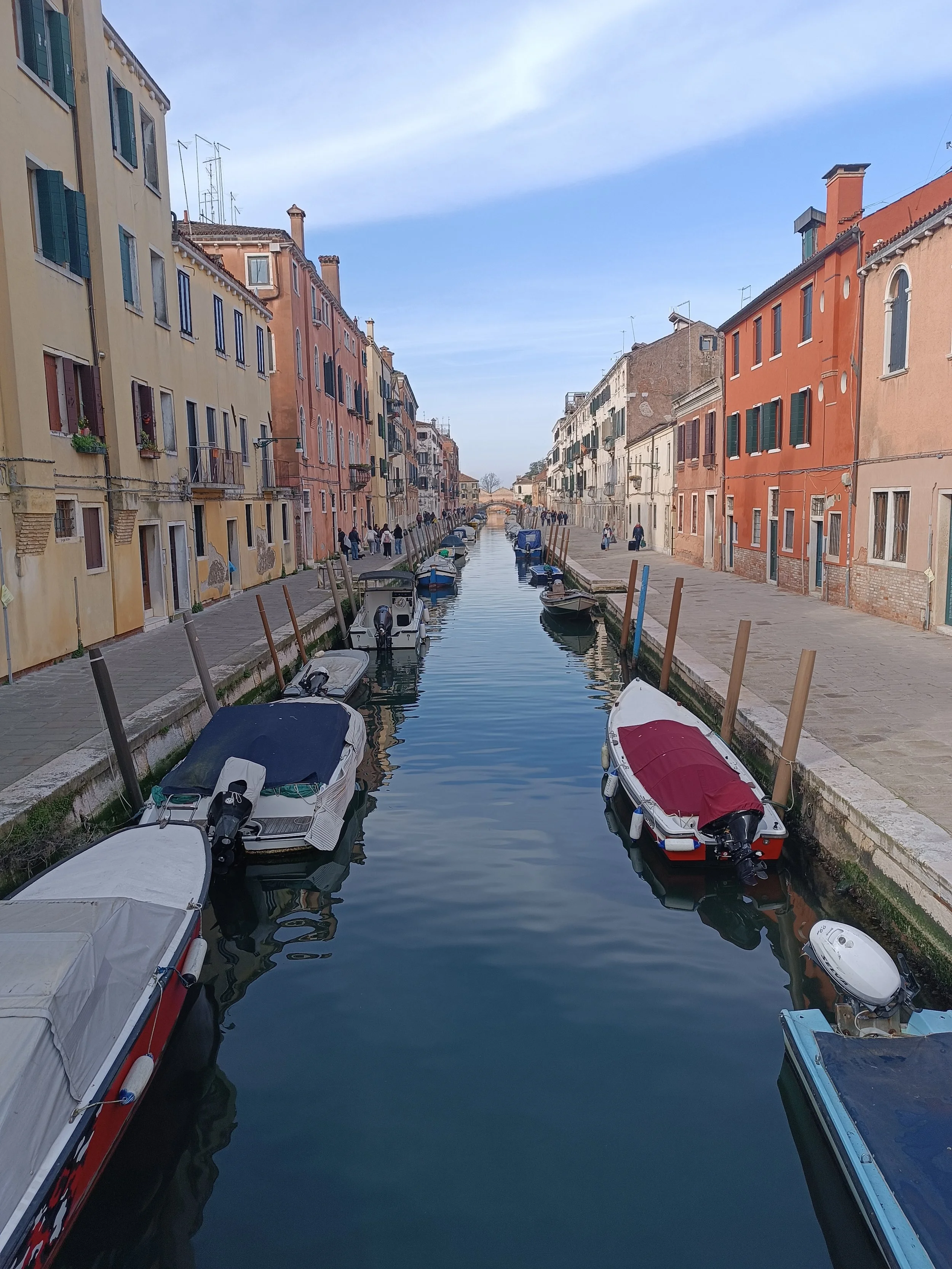
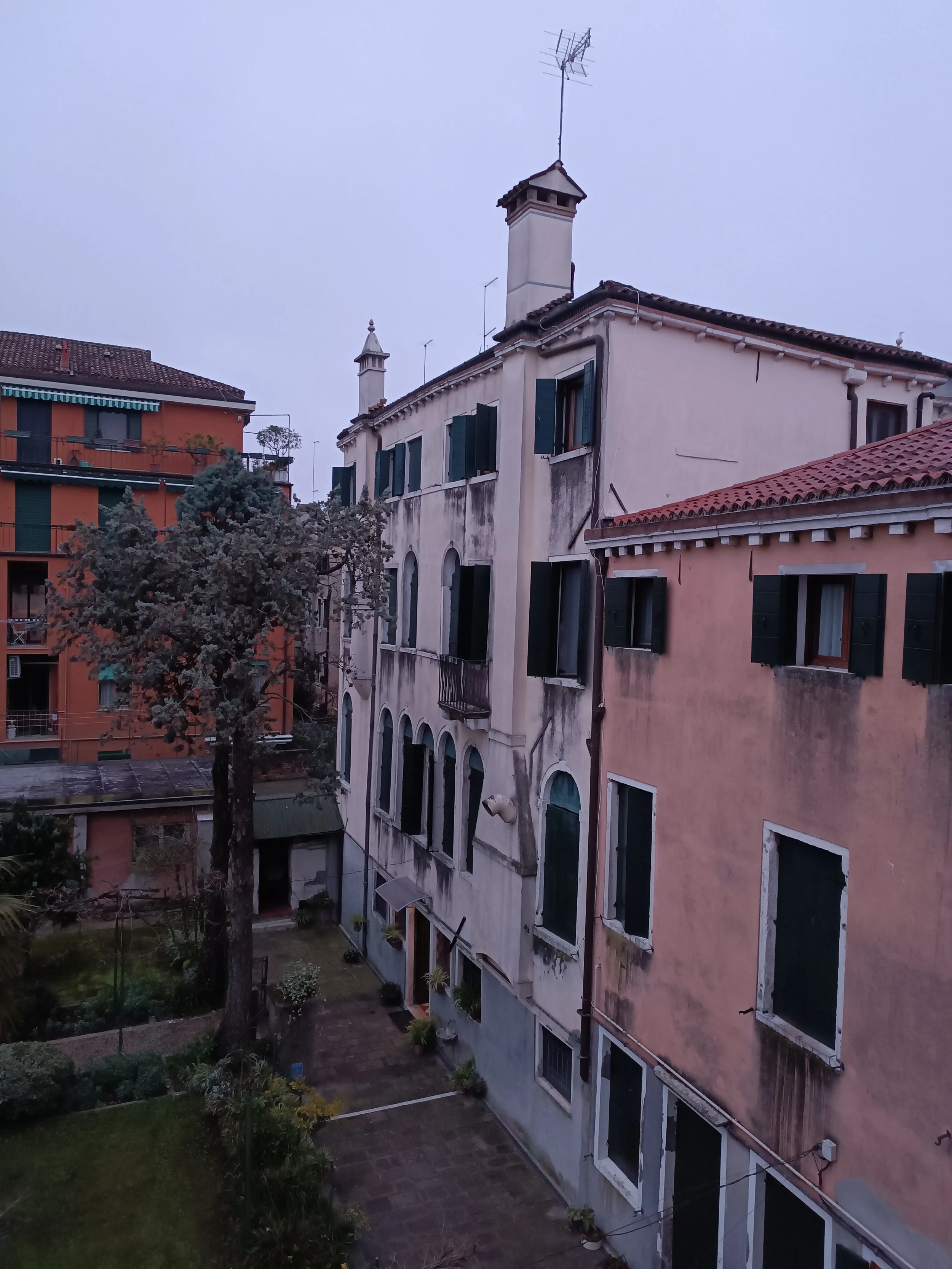
This city’s reputation is steeped in legend. Over the centuries, it has enchanted first the pilgrims, then the poets and thinkers, and nowadays several million tourists. Casanova made a spectacular escape from his imprisonment in the Doge’s Palace (1756), Goethe stopped off here on his Italian journey (1786, 1790), whilst Lord Byron stayed for several years (1816–1819). Marco Polo, Titian, Vivaldi. Later: Peggy Guggenheim. Venice is a city of art and film, and, in this respect, the world’s oldest festival venue.
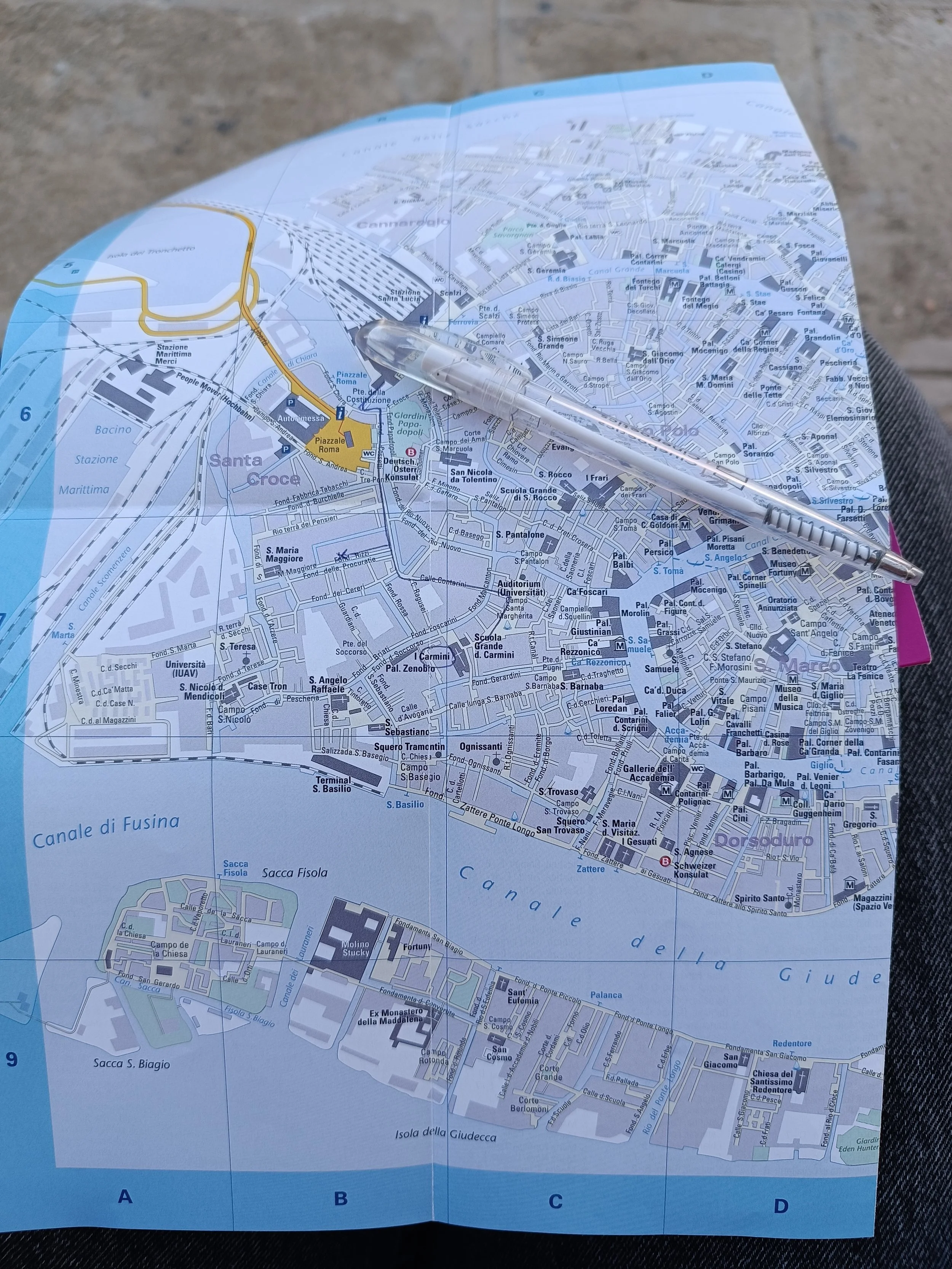
Once I’ve got my orientation sorted – Venice counts 127 islands in its historic centre, divided into six sections and linked by 439 bridges.[2] Bridges? Wonderful. This means you can also explore the city on the water comfortably on foot – so I set off, following the pull towards St Mark’s Square. The cathedral, the clock, the Doge’s Palace, the two-storey Procuratie with their lower colonnade – this famous ensemble of buildings has spruced itself up and shines as a masterpiece of European cultural history. The sun’s rays do the rest. I gaze at the cathedral. With its wealth of detail and diversity of form, the exterior already looks like a church interior: paintings with religious and secular motifs in the round arches, towers with statues of saints, marble columns, four bronze horses and a golden lion with wings.
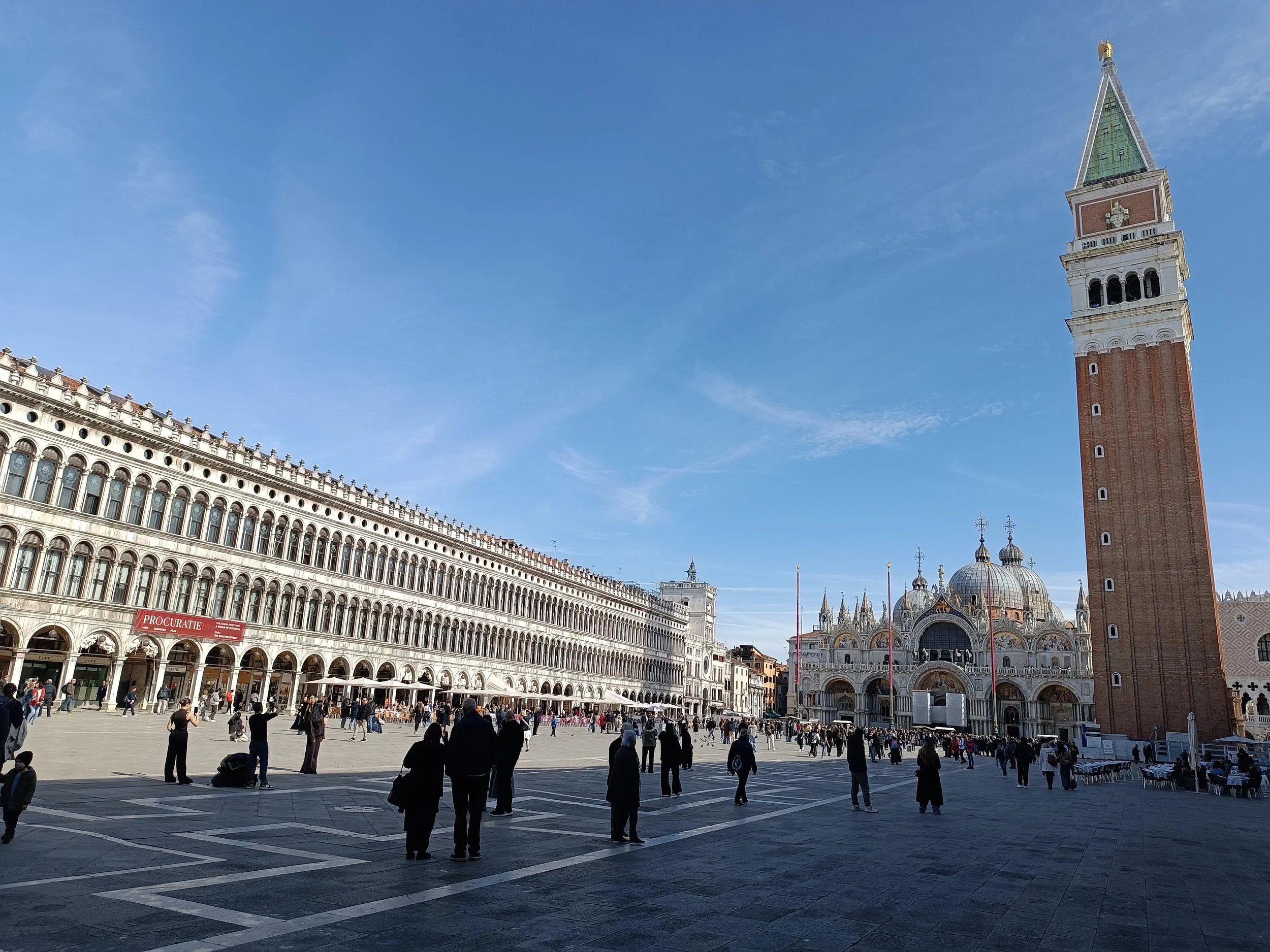
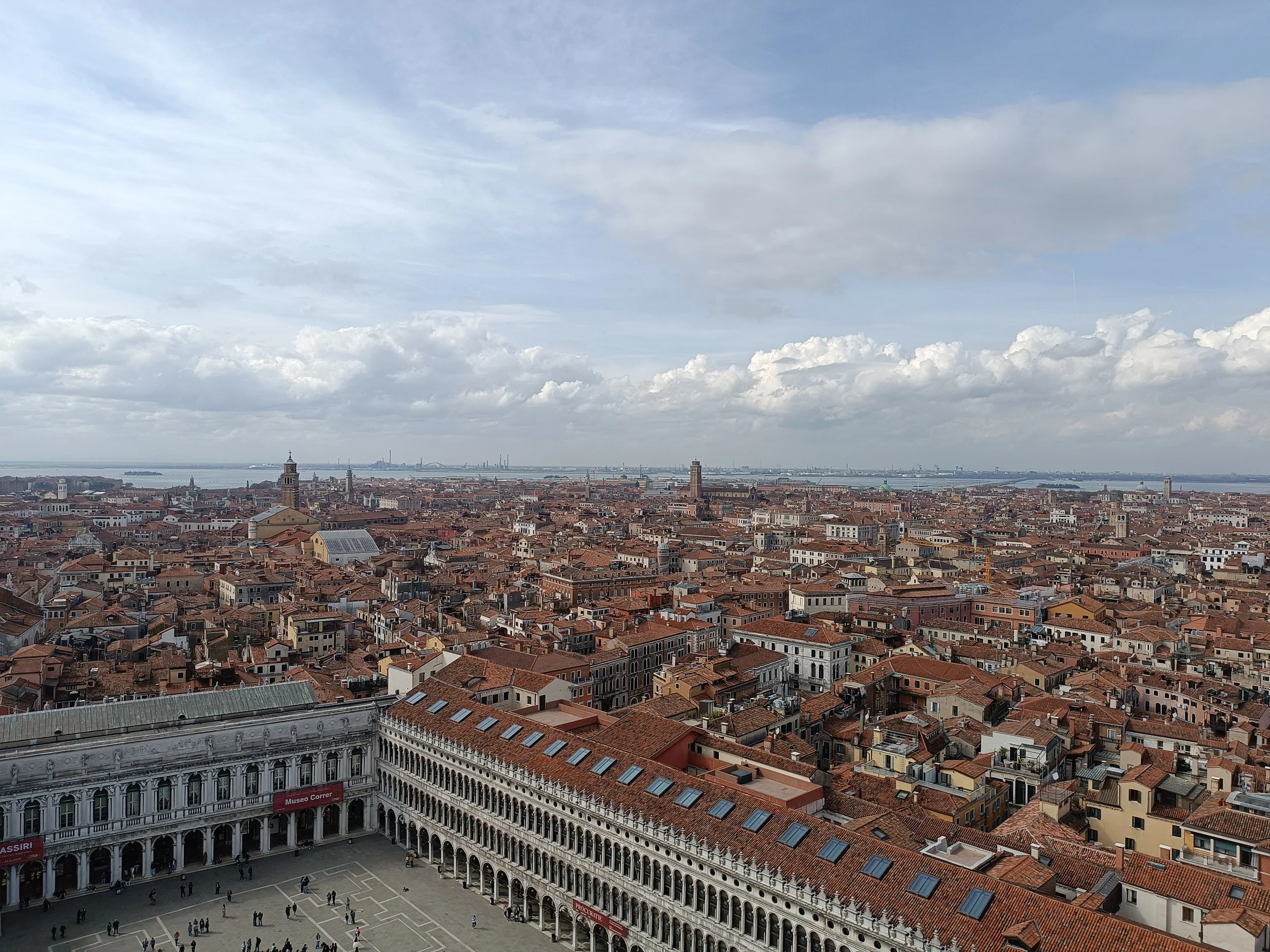
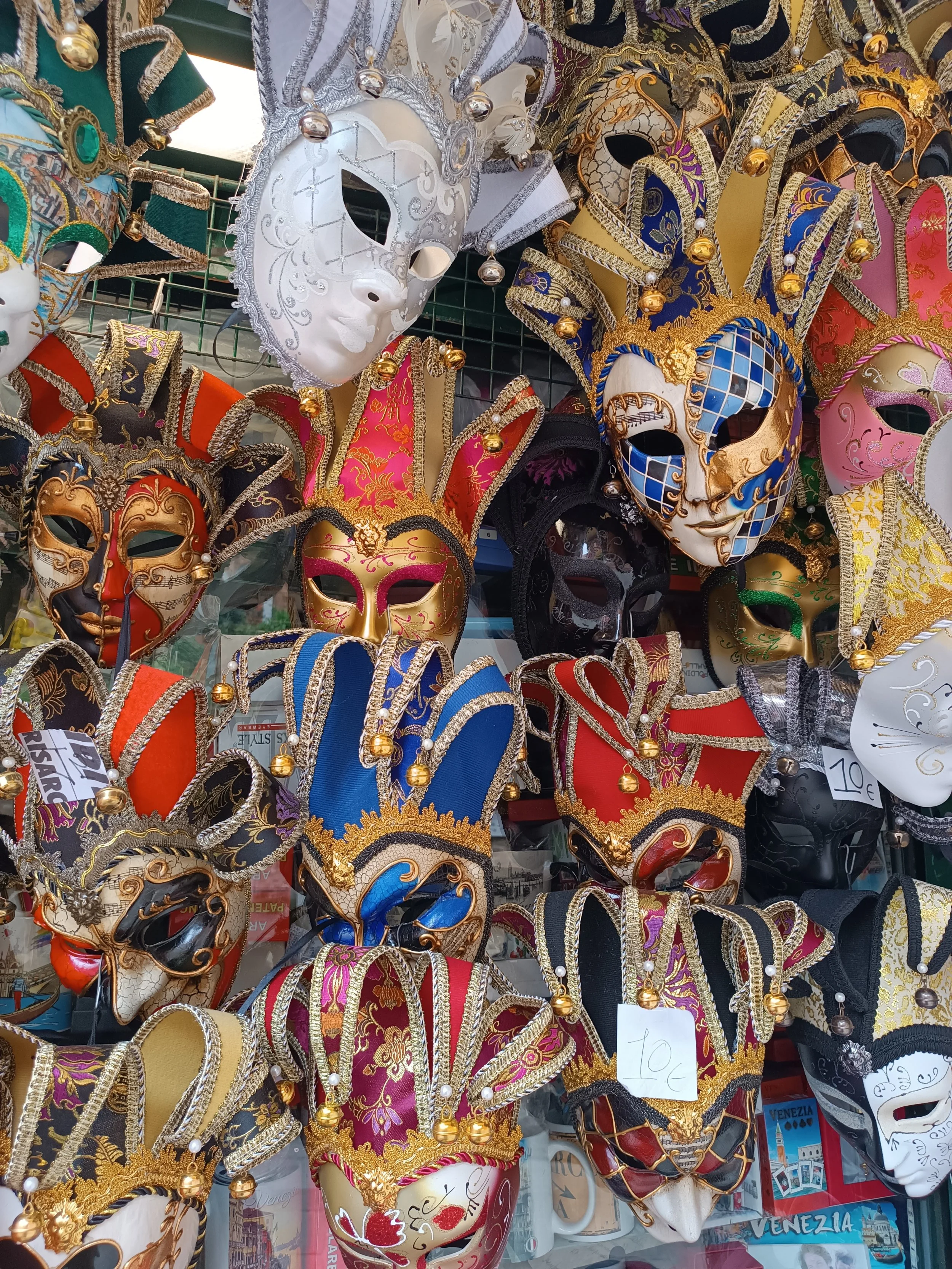
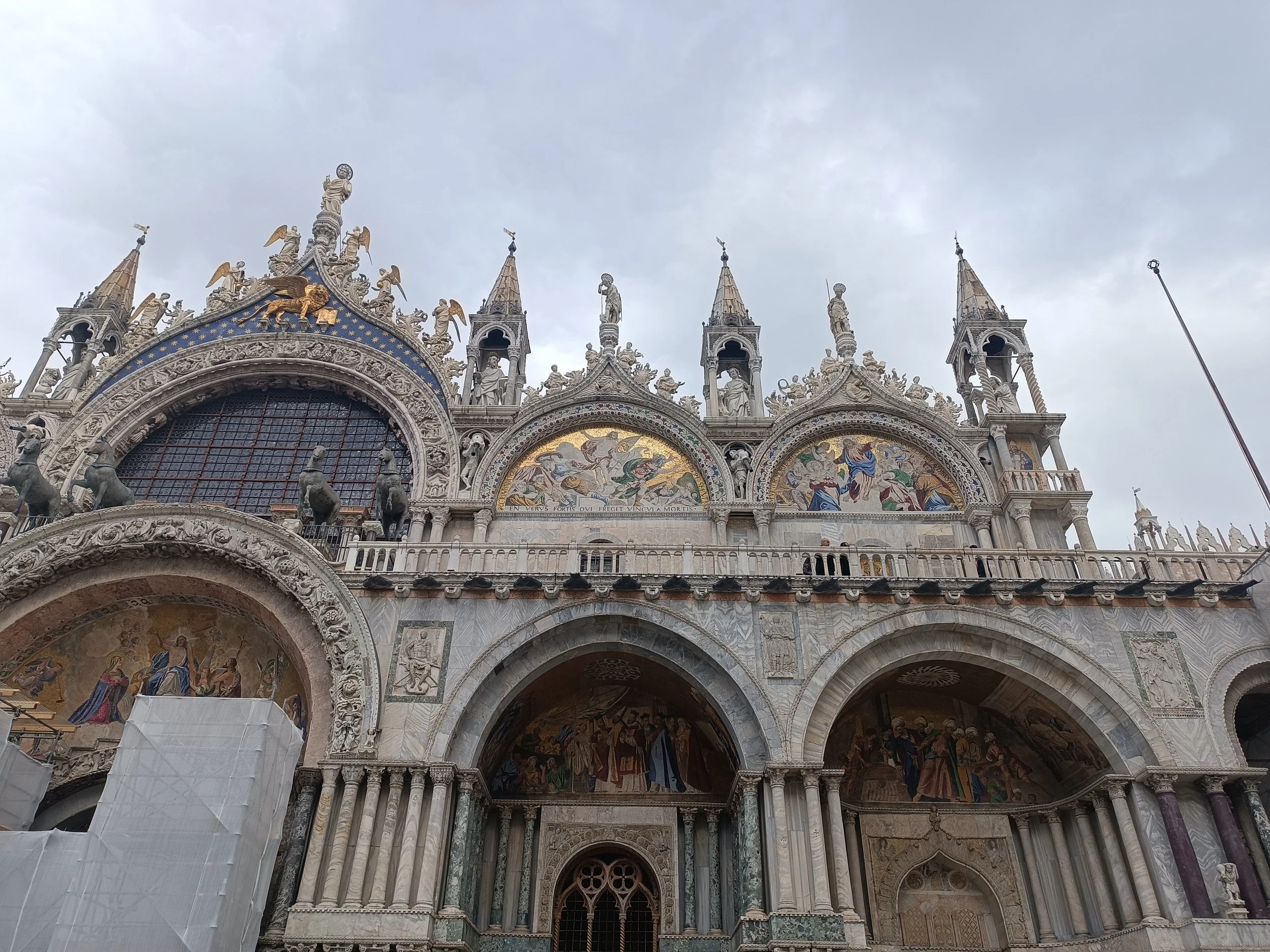
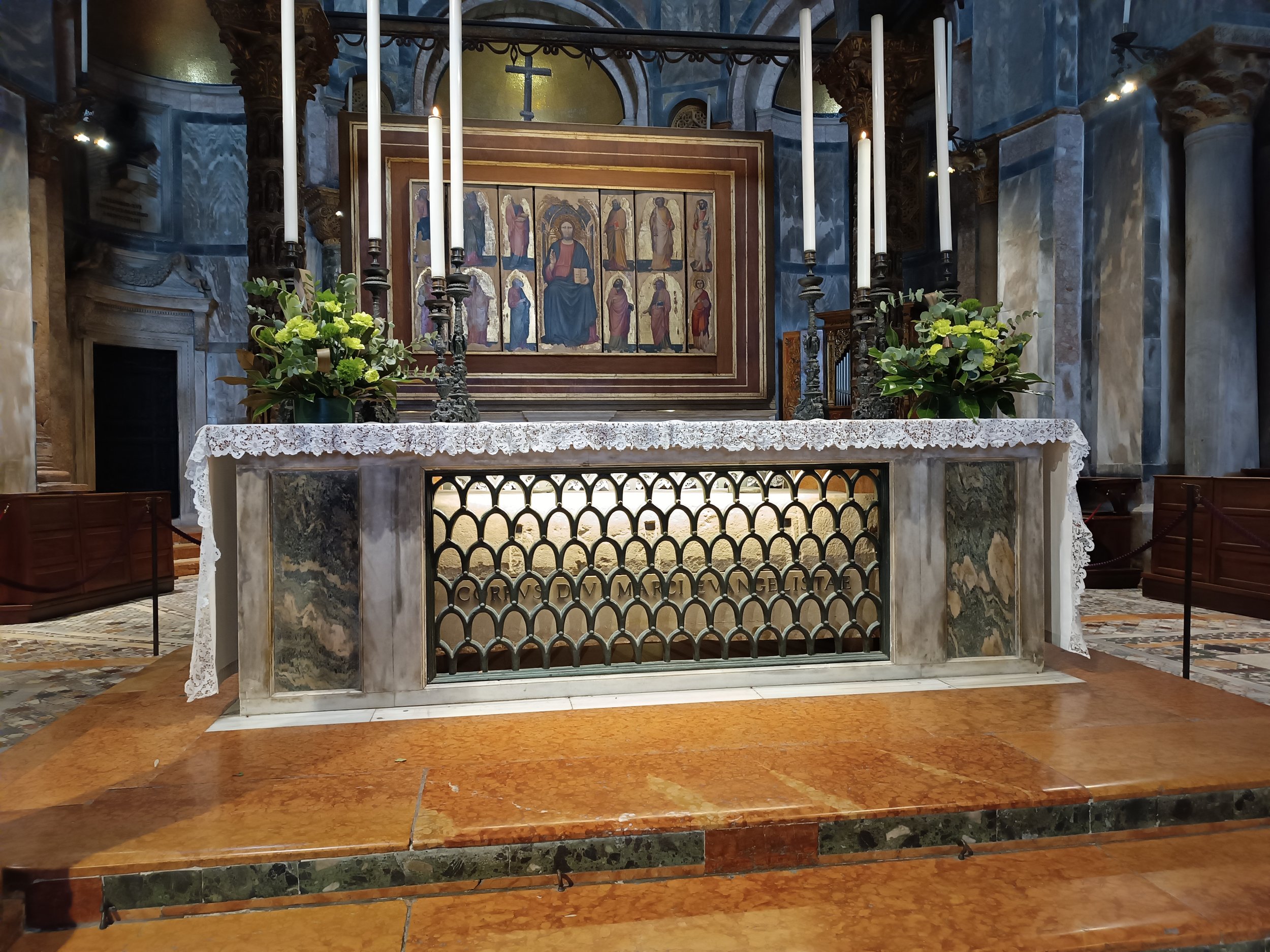
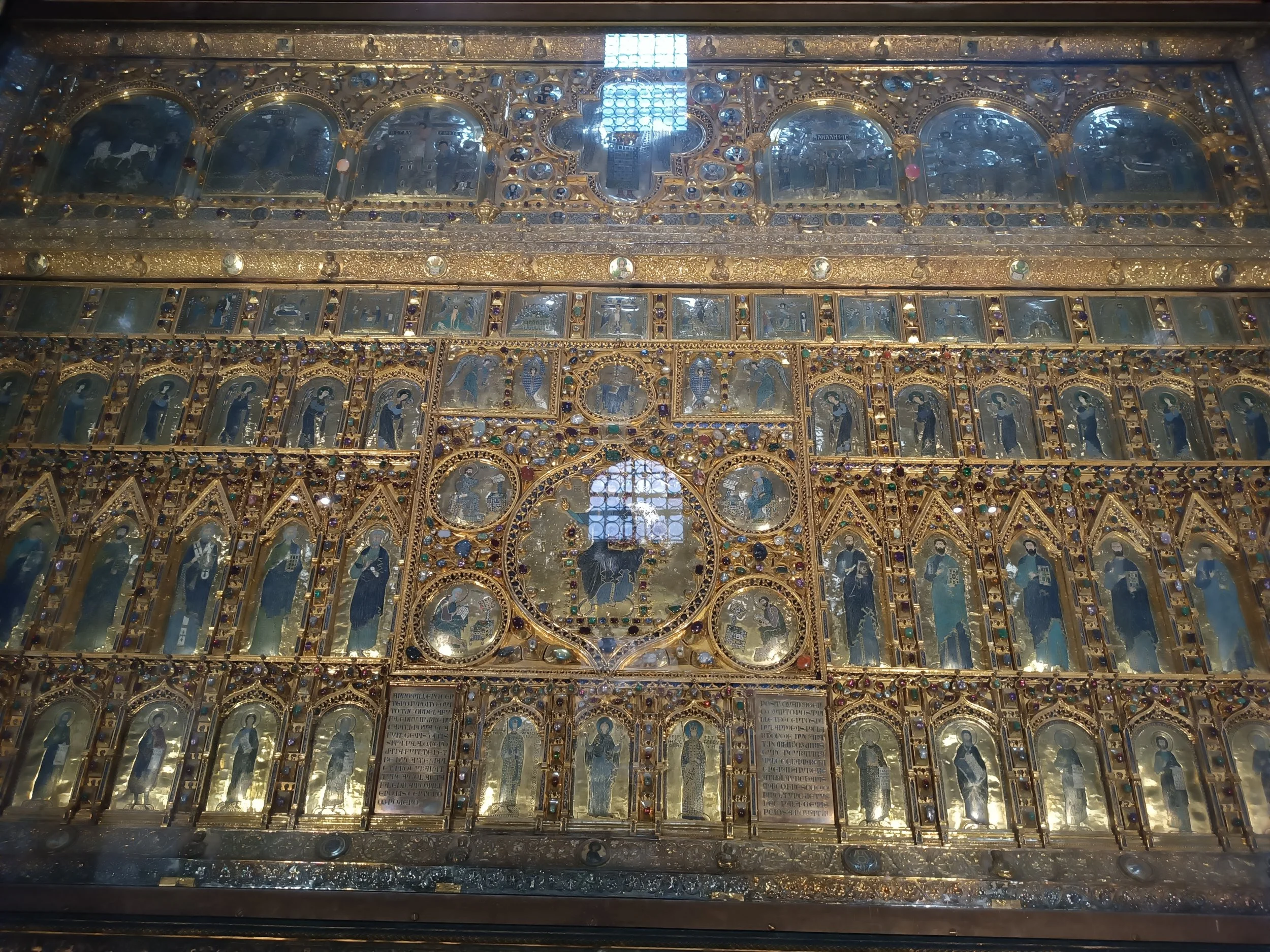
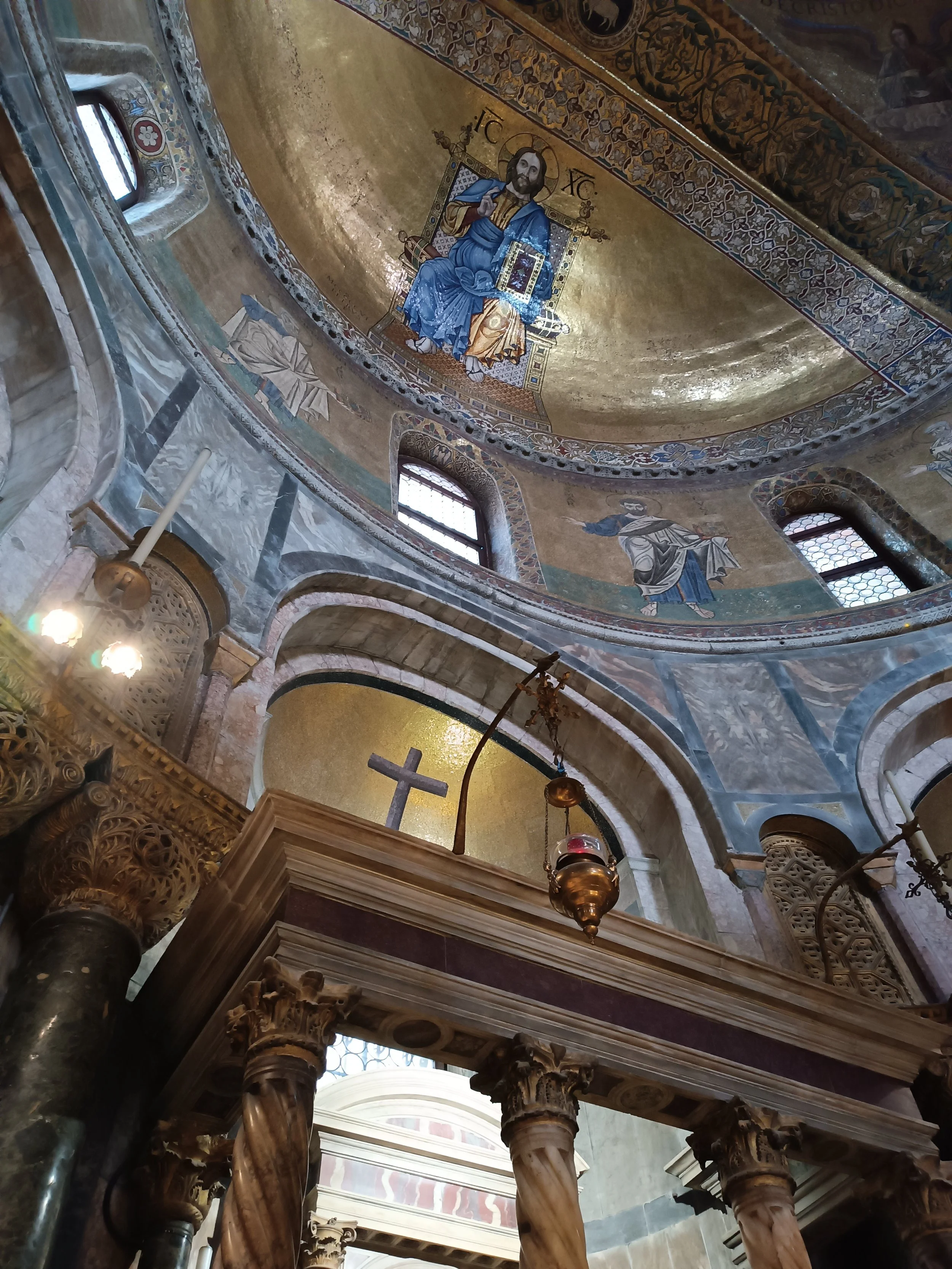
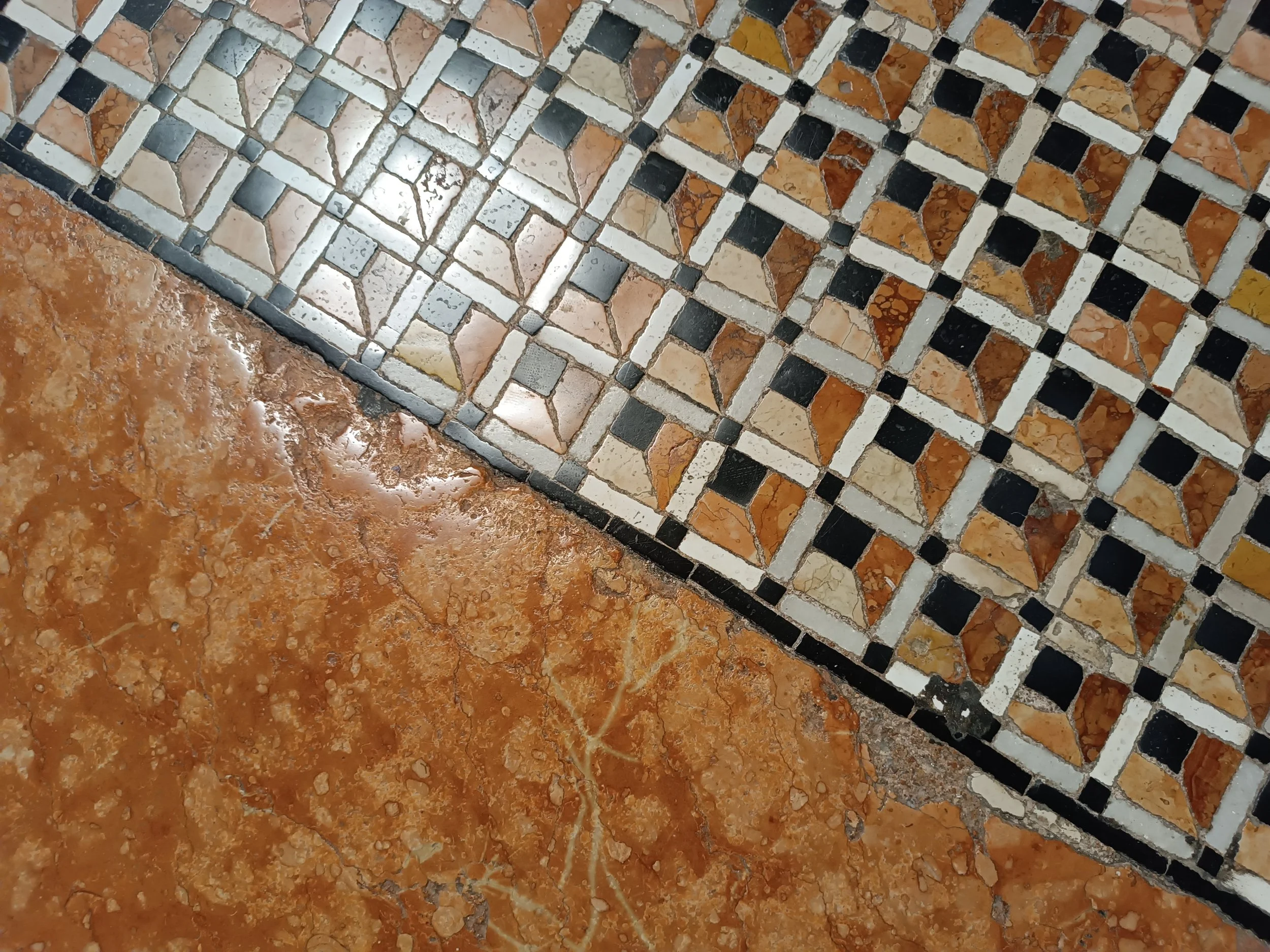
It was not until a few days later that I visited the interior of St Mark’s Basilica. Here, across the church walls and domed vaults, a visually stunning decoration of golden mosaic tiles stretches over 4,000 square metres. Equally impressive is an altarpiece measuring 1.40 × 3.45 metres and set with 2,000 precious stones. And beneath a canopy, inside a sarcophagus: the relics of Saint Mark. According to legend, in the year 828, two Venetian merchants are said to have stolen the evangelist’s remains from Alexandria and smuggled them to Venice by concealing the bones beneath pork fat as they passed the Muslim customs officers. From then on, Mark was regarded as the patron saint of the rising city, his symbol a winged lion. In this context, I learn – to my naivety’s dismay – that many of the components of the state church originate from looting, particularly in connection with the Fourth Crusade, and I wonder whether there are any public discussions in Italy about looted art. Then I look down at the floor and nevertheless delight in the most beautiful detail: the ornamental marble mosaic, which, thinking slightly outside the box, reminds me of M.C. Escher.
Yet another church makes a greater impression on me. It is the Basilica of Santa Maria Gloriosa dei Frari, which I happen to discover one evening after dark, despite its monumental architecture. The church is lit only in places, making the altarpiece at the very back shine even more brightly: the Assunta, Titian’s depiction of the Assumption of the Virgin Mary, a masterpiece of the Venetian Renaissance. The few people present move about reverently. One of them sits lost in thought on an only chair, staring at the allegorical tomb of Doge Giovanni Pesaro. So perhaps this place really does offer “a moment of peace and inner tranquillity”, as the information leaflet promises.
They do exist: those calm moments in the crowded city. The quiet corners. Where you can hear the wind whistling. With a blue ballpoint pen, I trace the labyrinthine paths onto my paper city map. Alleys become secret passages, sometimes barely wide enough for a person and with no sky above, red stone to the left and right – they lead to deserted squares. The houses are empty too, with the shutters all boarded up. People once lived here. Wait, did someone in a monk’s robe just flit past over there? I’m not sure; all I can see now is his shadow. Where am I?
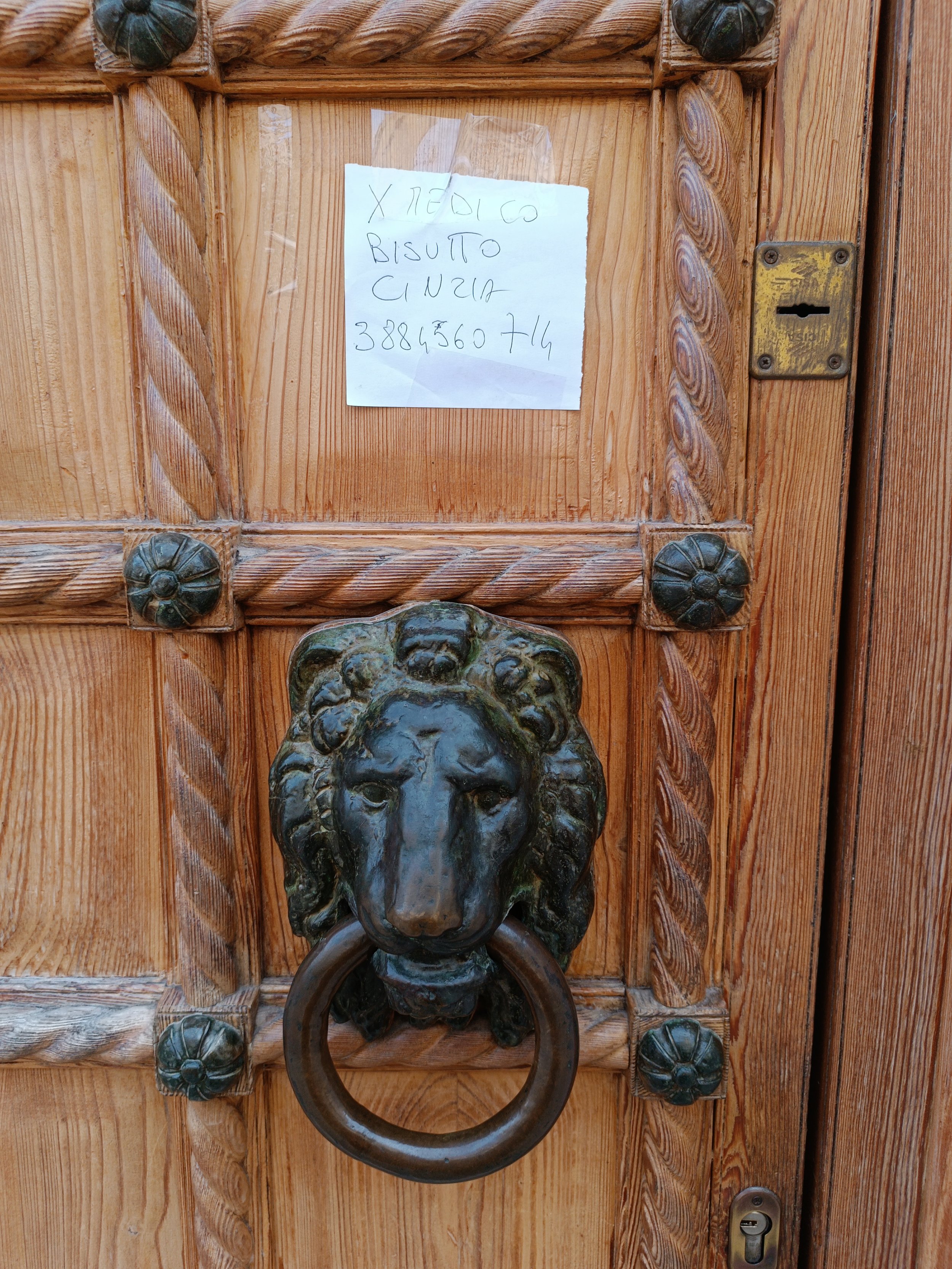
Before ten o’clock in the morning, the canals are usually deserted too. Only a few souls cross my path. Bongiorno. What a lovely chance to greet the locals or at least give them a friendly nod. I walk to the Zattere and stroll along the riverbank there. My nose pointing towards the water, with the houses of the former aristocracy behind me. Here I discover my love for door decorations, especially lion’s-head door knockers, and in doing so forget that I had already dreamt of a green door with a knocker in my book.[3]
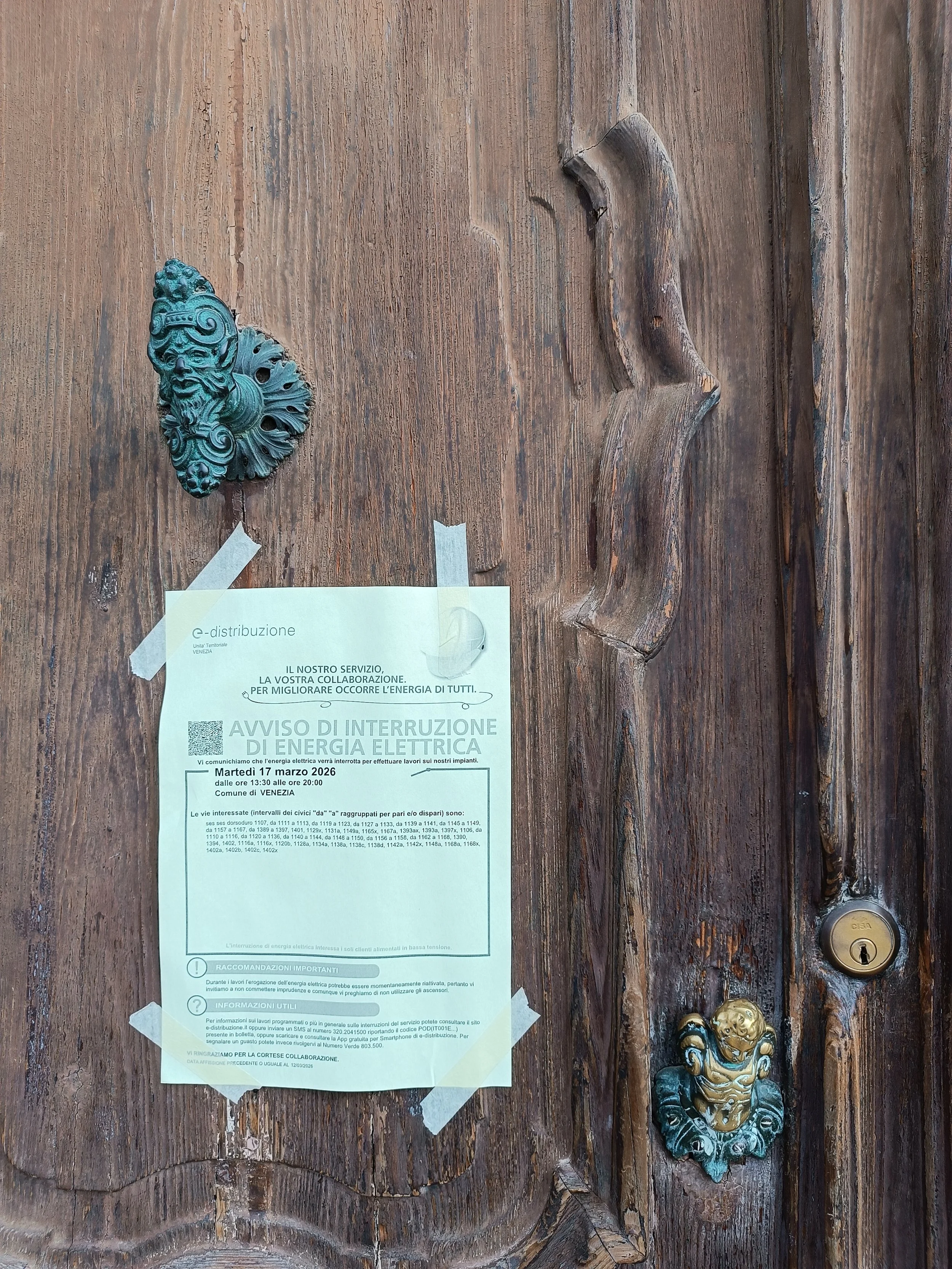
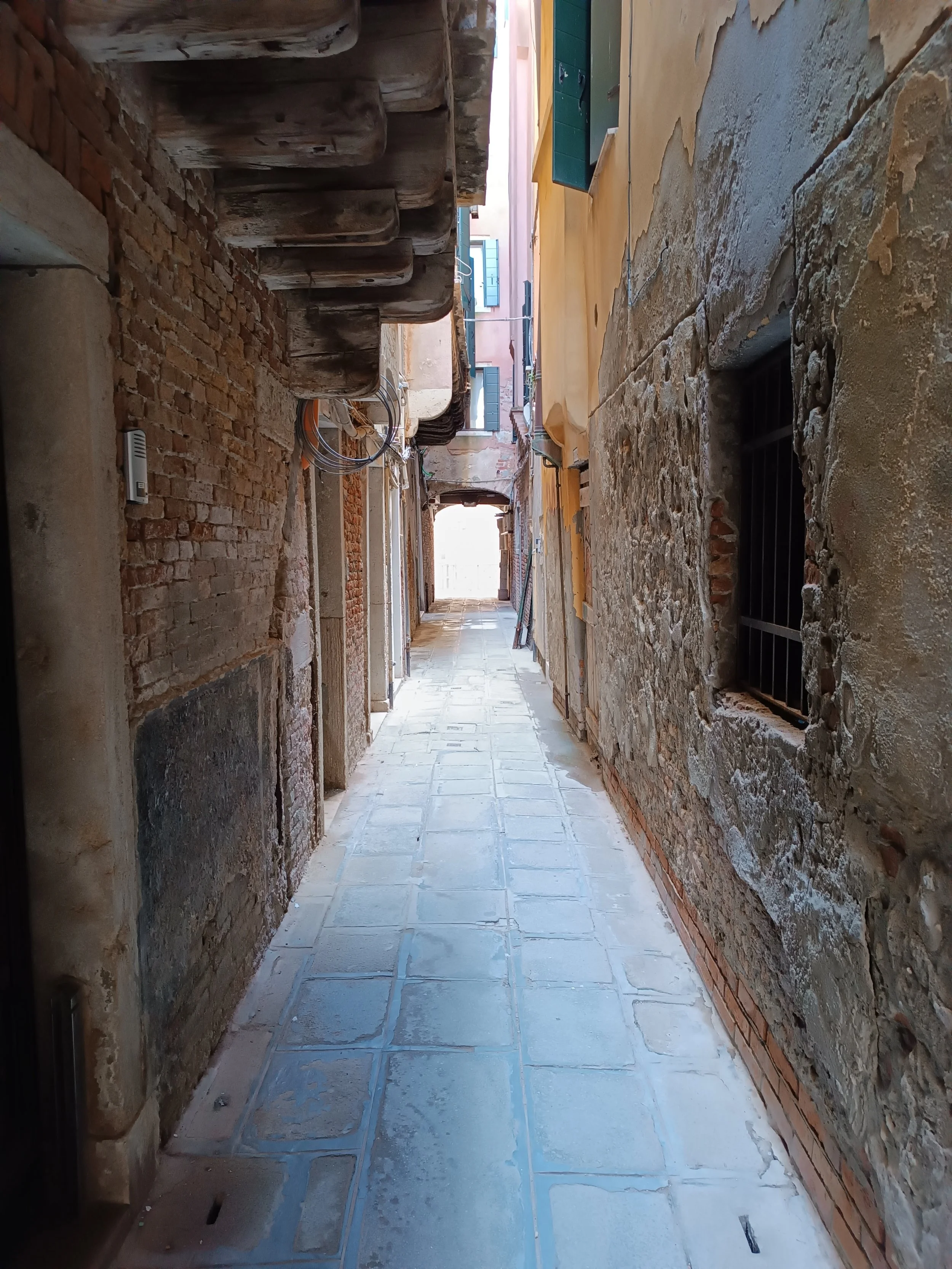
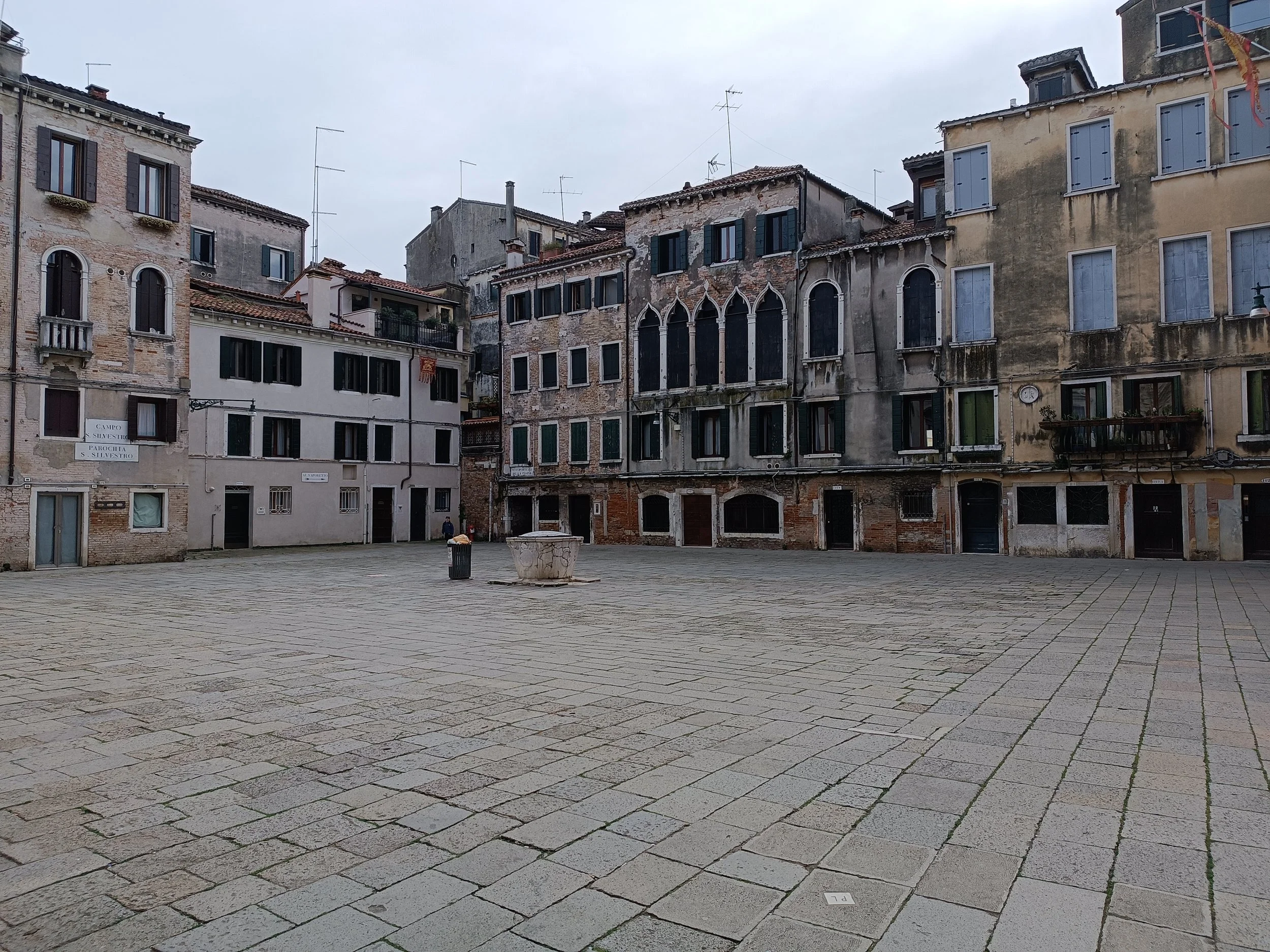
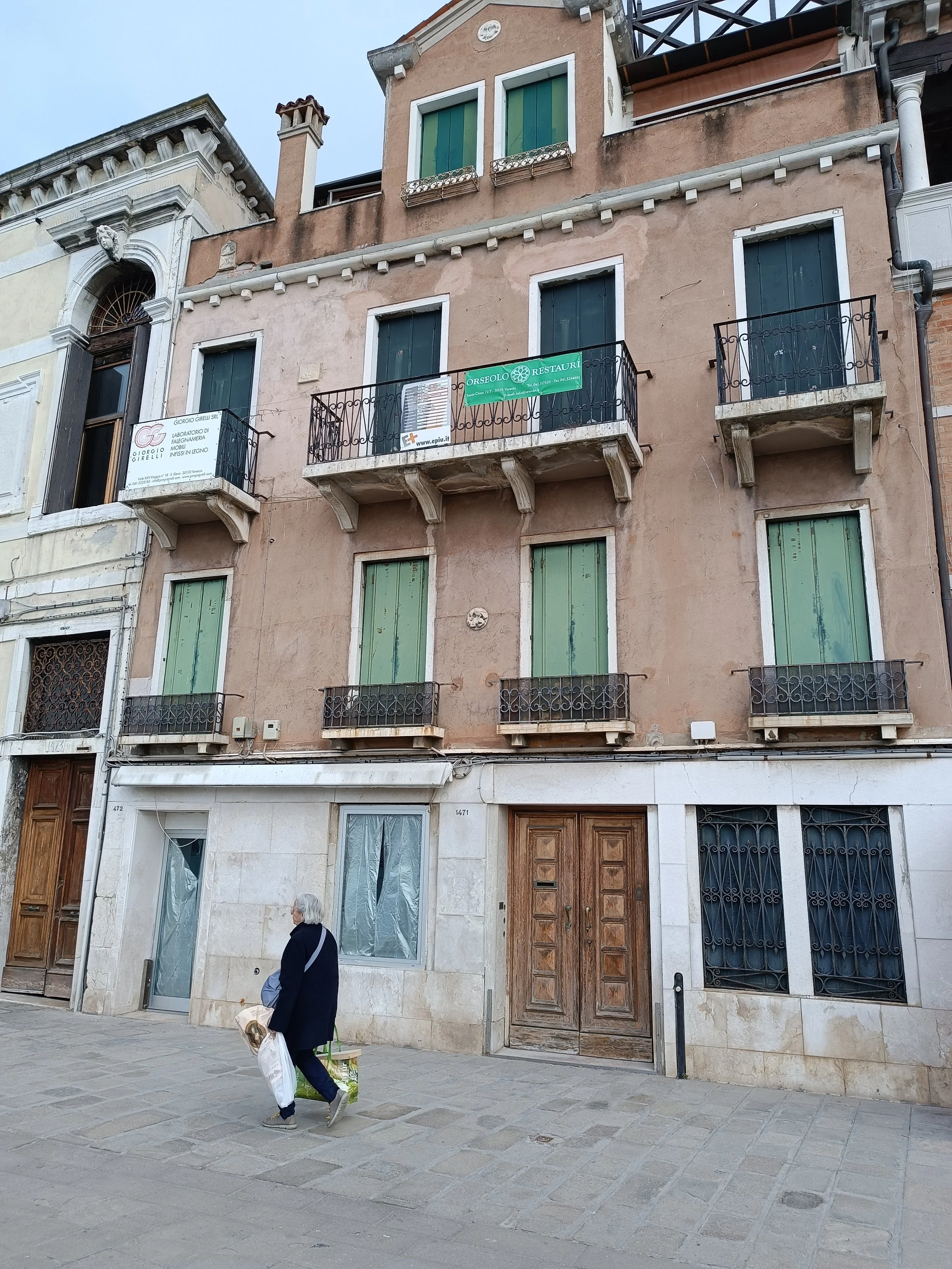
I sit down on the edge of the quay wall, my legs swinging like a child’s; beneath me, the water glistens. And at that very moment, after careful consideration, I make an important life decision. Not without trembling, not without doubt, yet with courage in my heart.
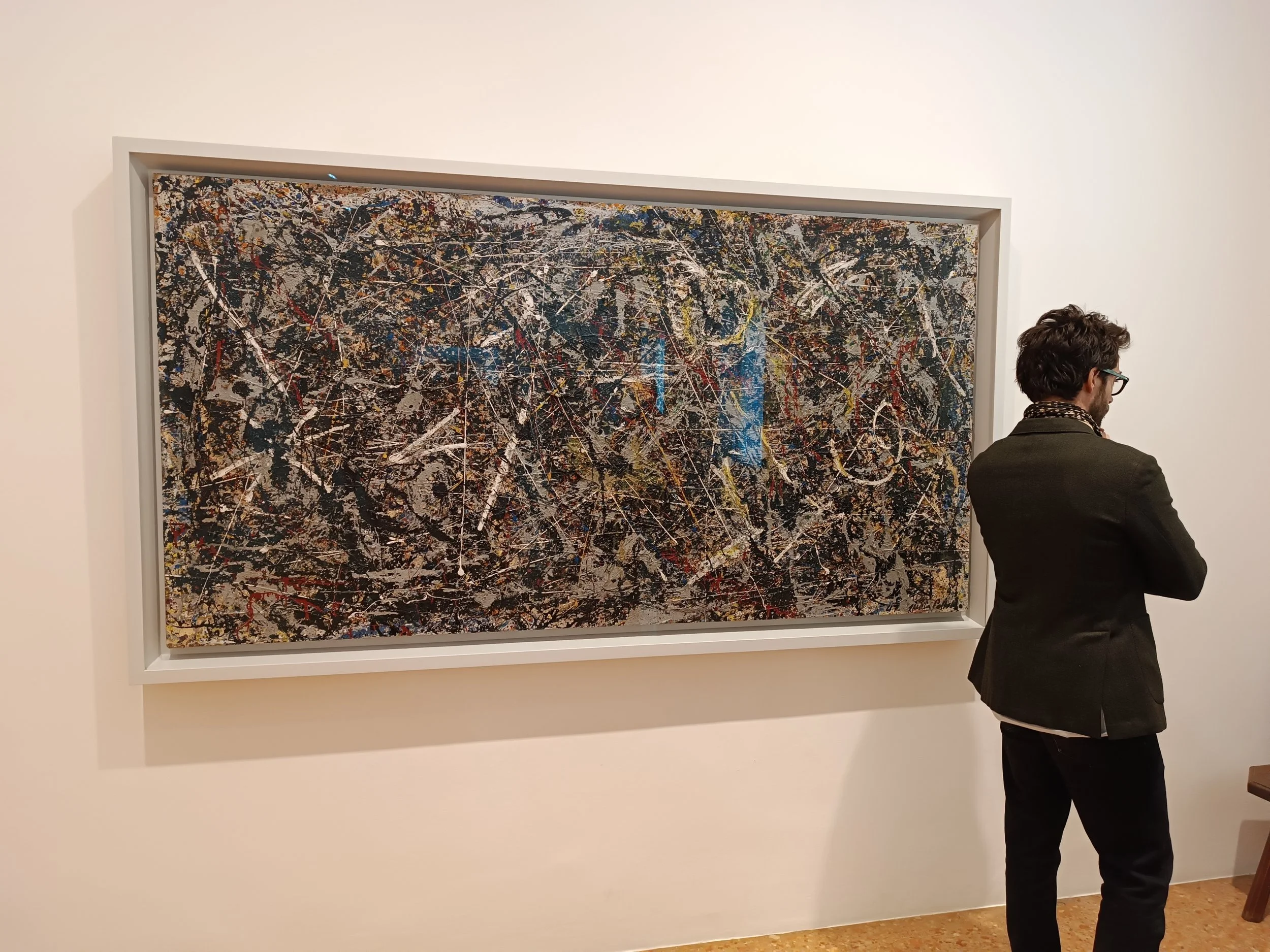
Afterwards, I visit the Peggy Guggenheim Collection. A famous name, lots of visitors. Crowds of people squeezing through the narrow rooms. The audio guide acts as a protective shield and transports me into the art world of Cubism, Surrealism and Abstract Expressionism, eventually leading me to Jackson Pollock, who took on the “risk of despair” whilst creating his painting Alchemy. Here, painting becomes an existential act, a search for one’s own being. There's another work that makes a deep impression on me: Rose by Agnes Martin. At first, I see only a white canvas, but the closer I get, the more I spot squares drawn in pencil, like a sheet of graph paper. Victoria, who is a fellow here, gives an impromptu talk describing the story behind the painting, which centres on roses and their beauty. She asks whether the beauty remains once the roses are gone. Where can beauty be found? Her thought: it lies within us – and in our willingness to recognise it.
This Sunday afternoon, I’m sitting in a street-side pub, treating myself to a Limoncello Sprizz to raise a glass to life and the future. Fabulous.
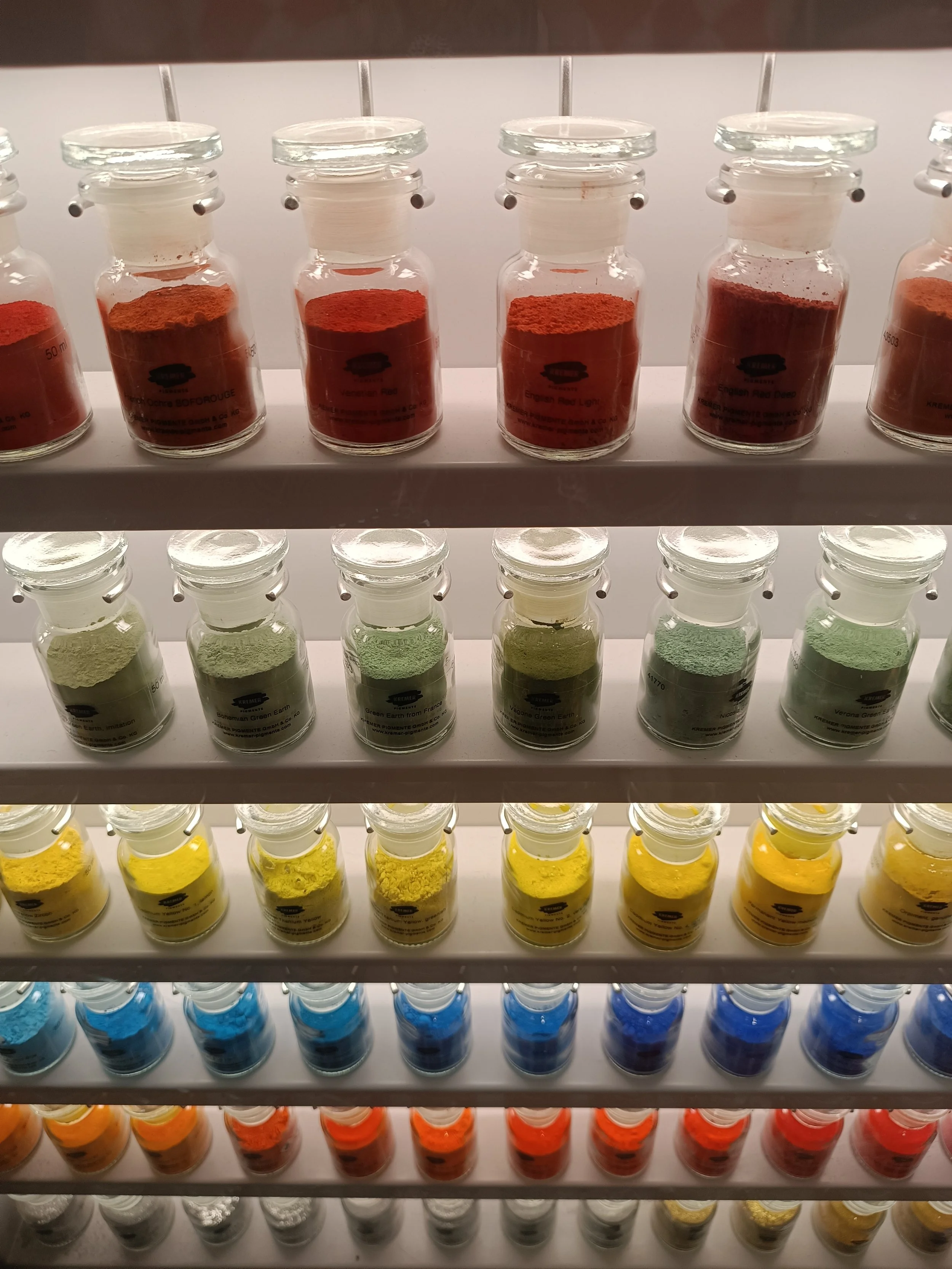
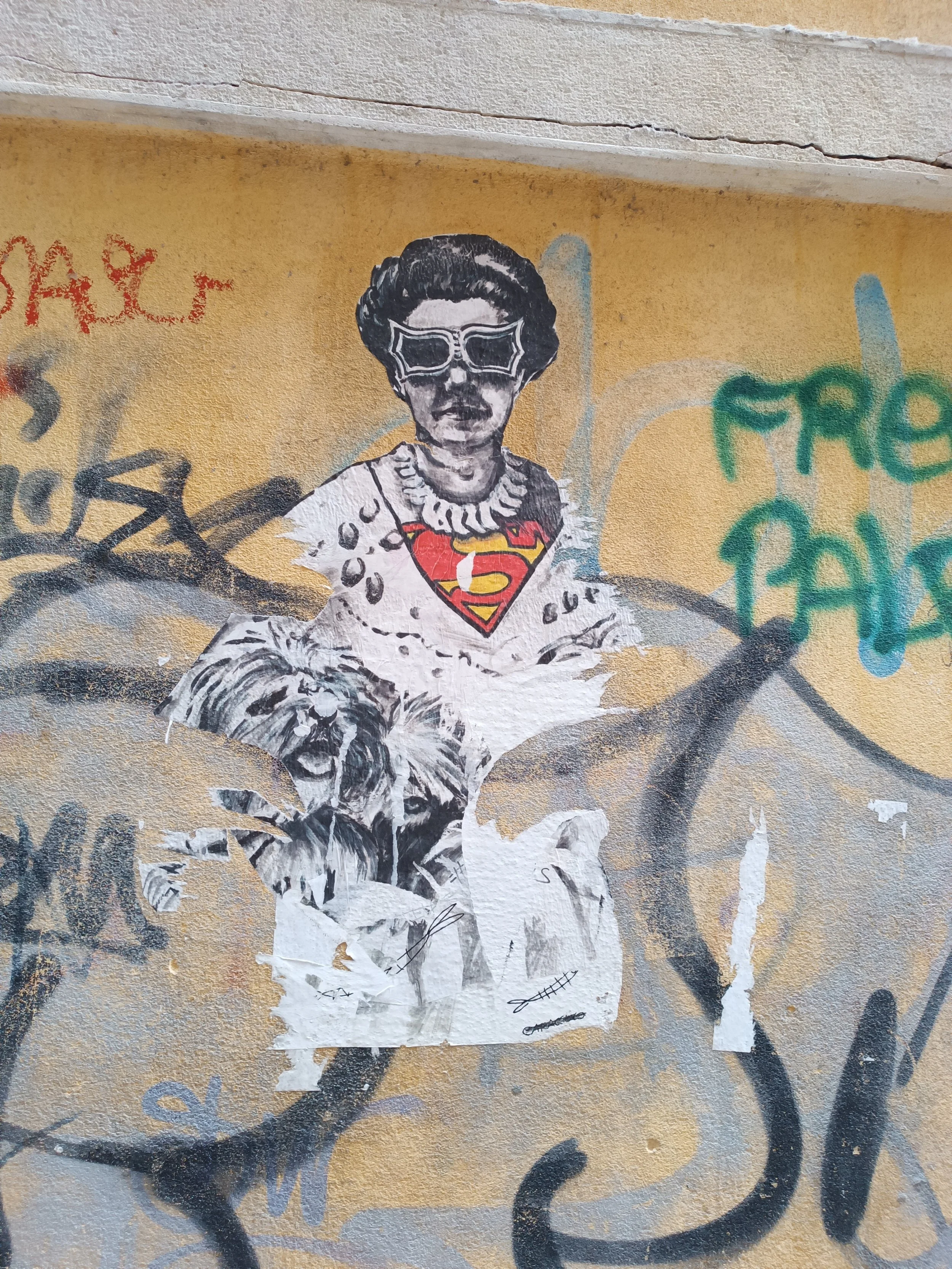
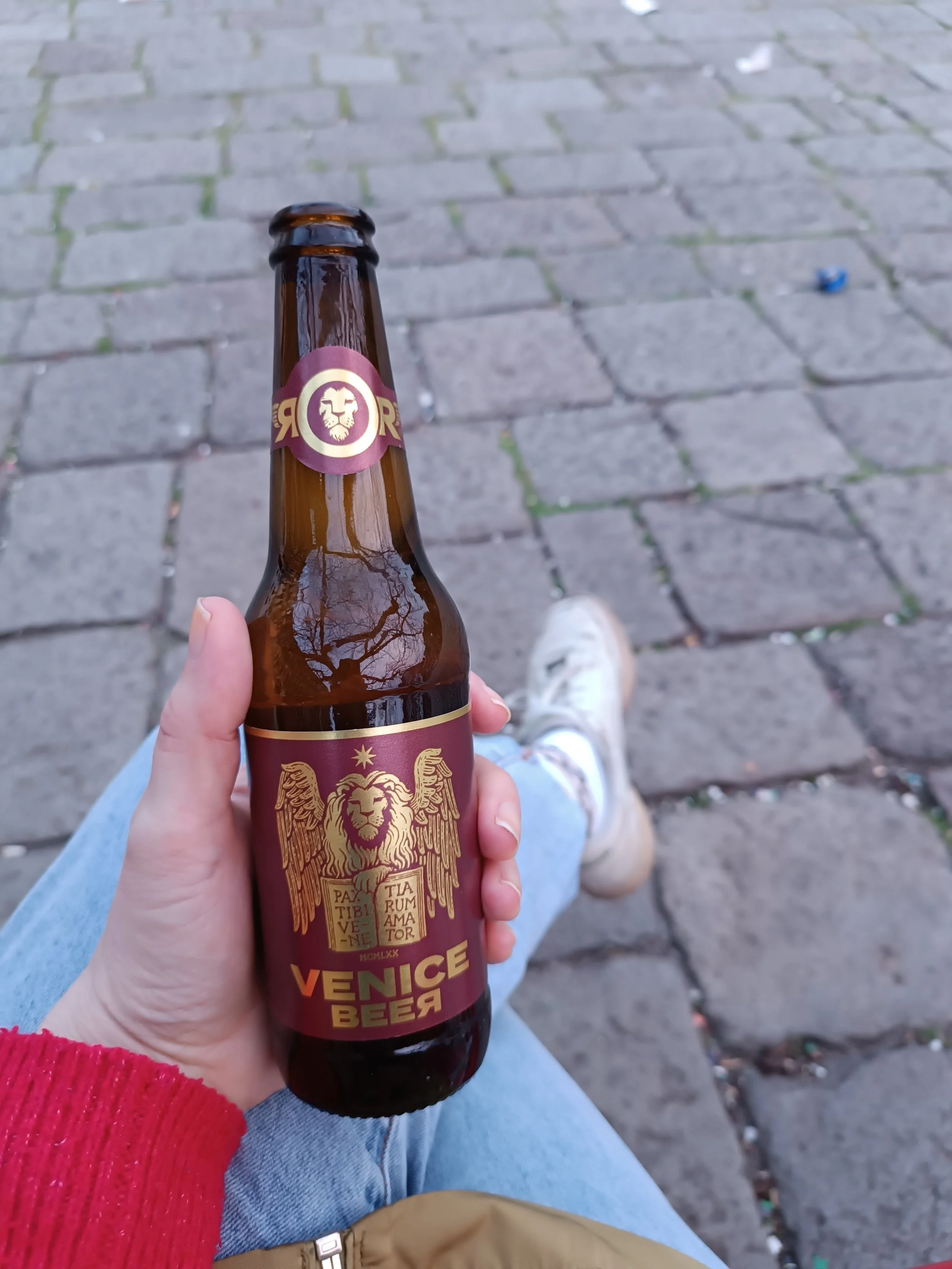

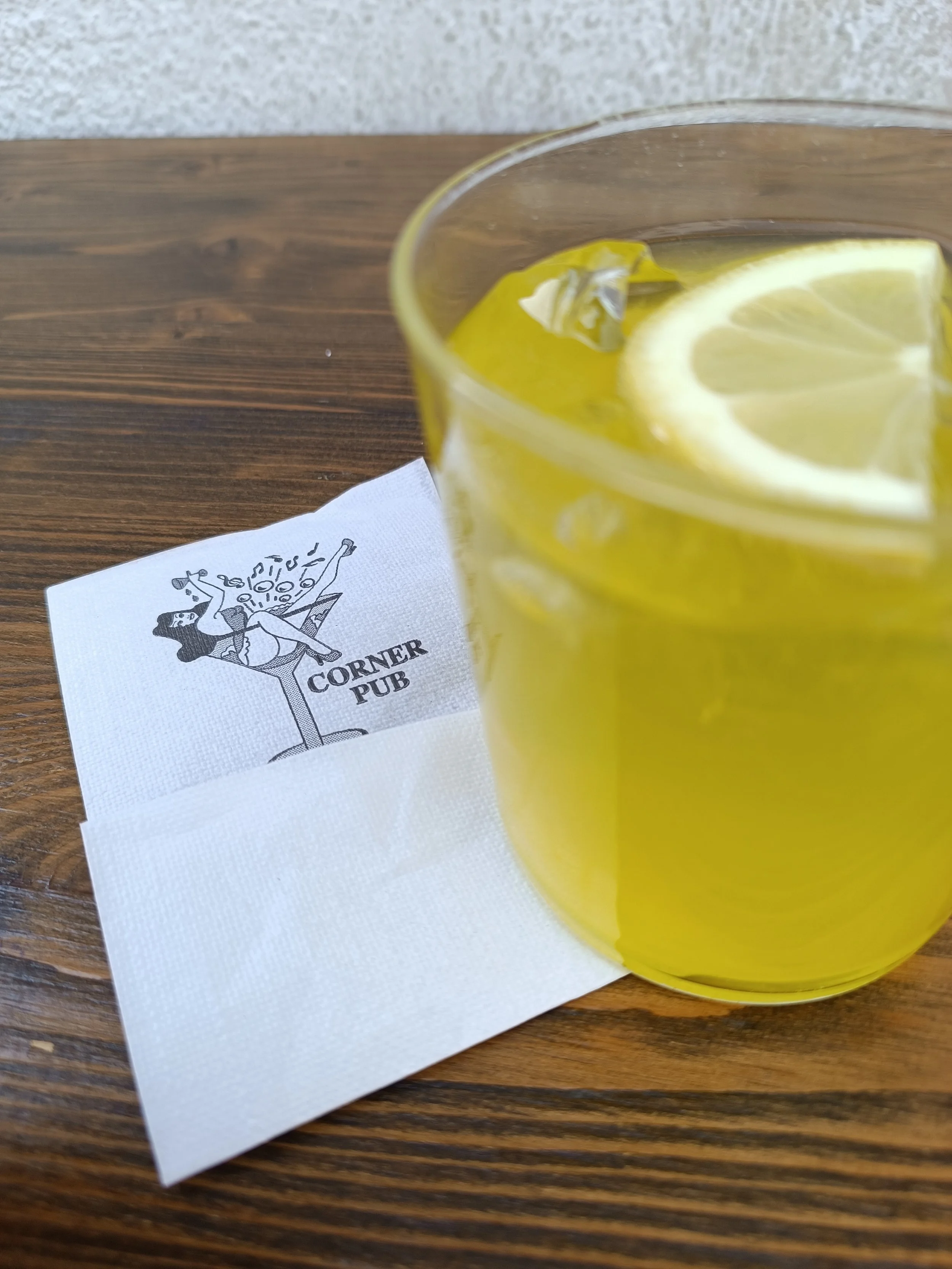
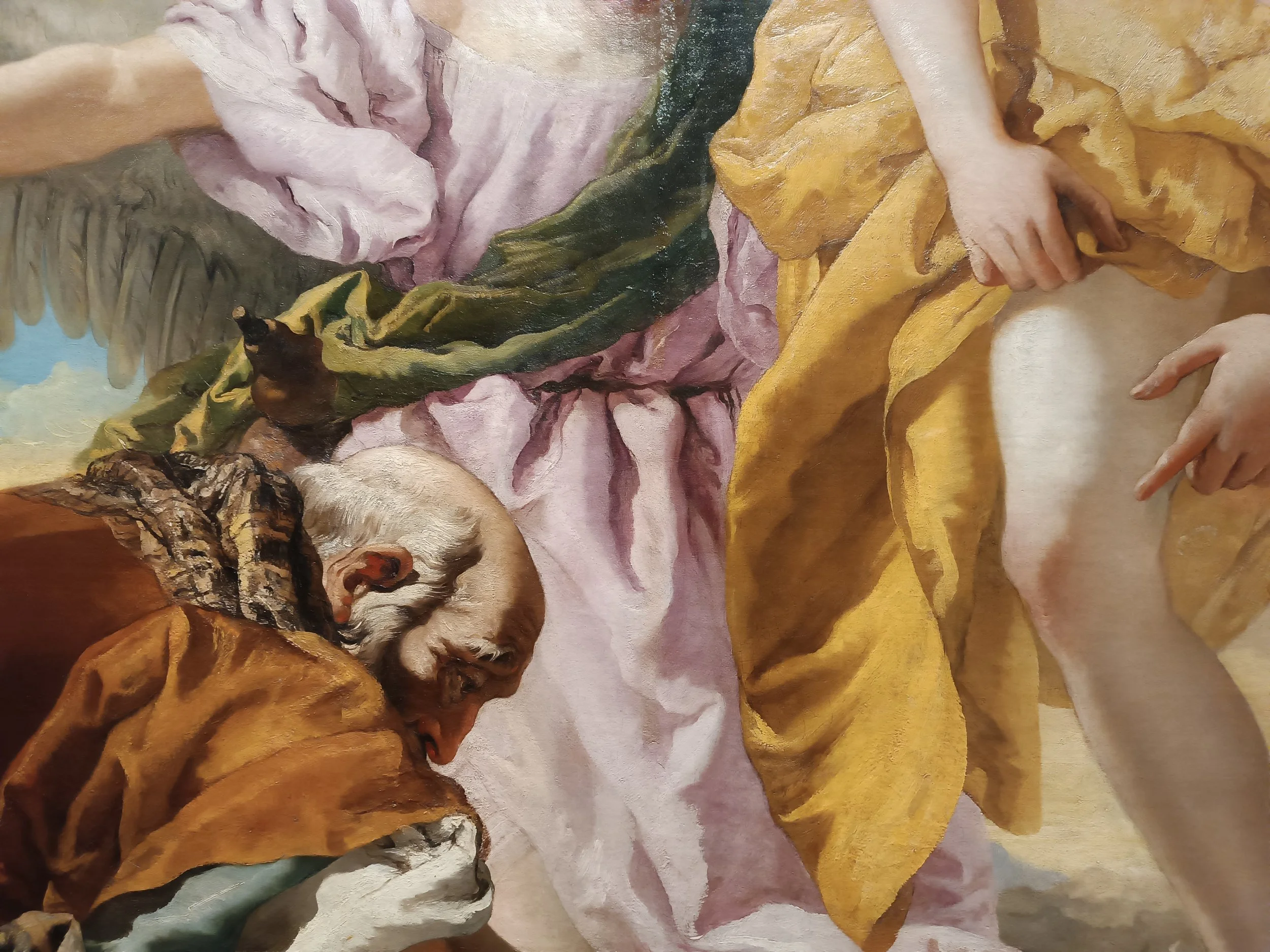
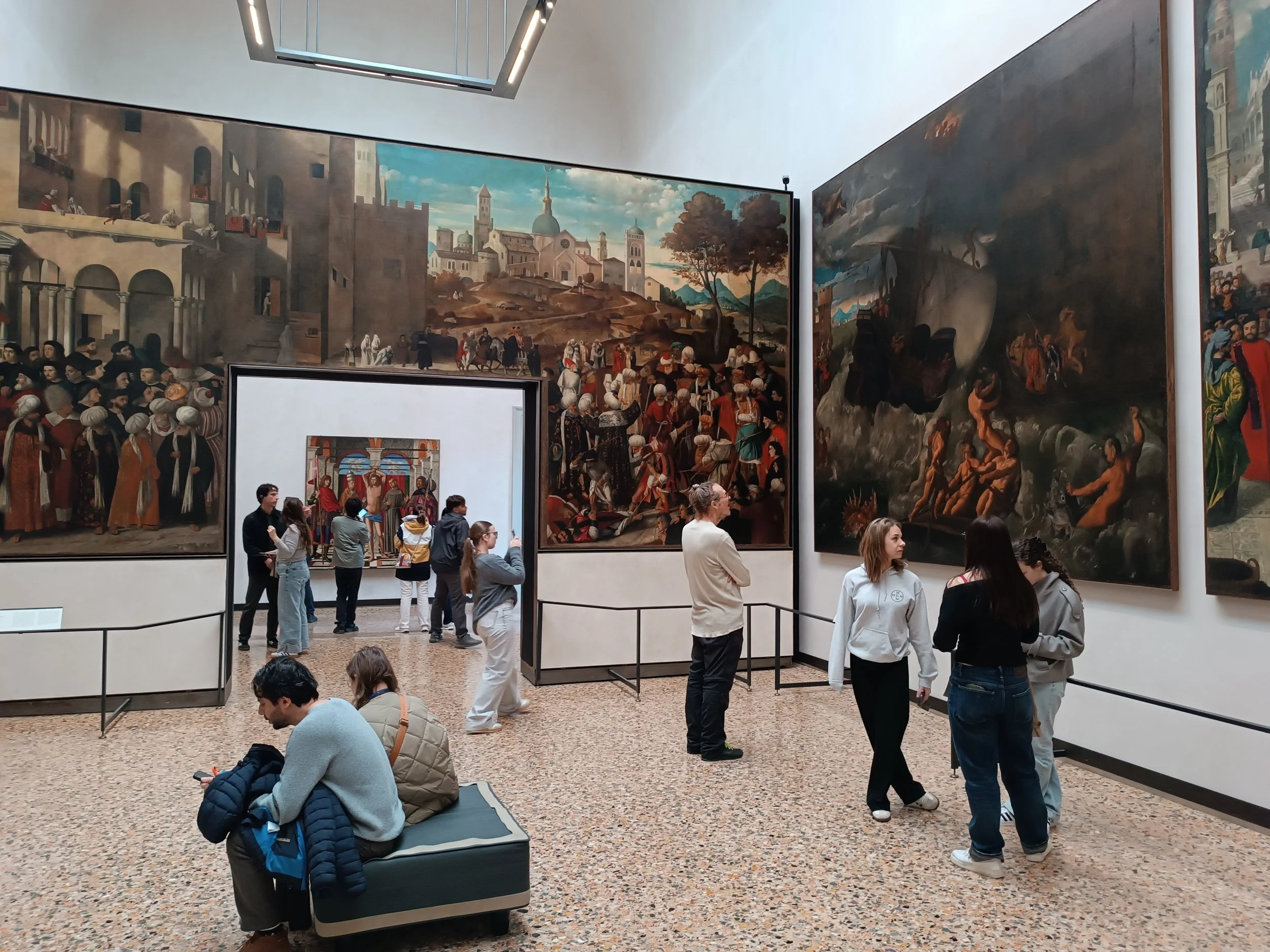
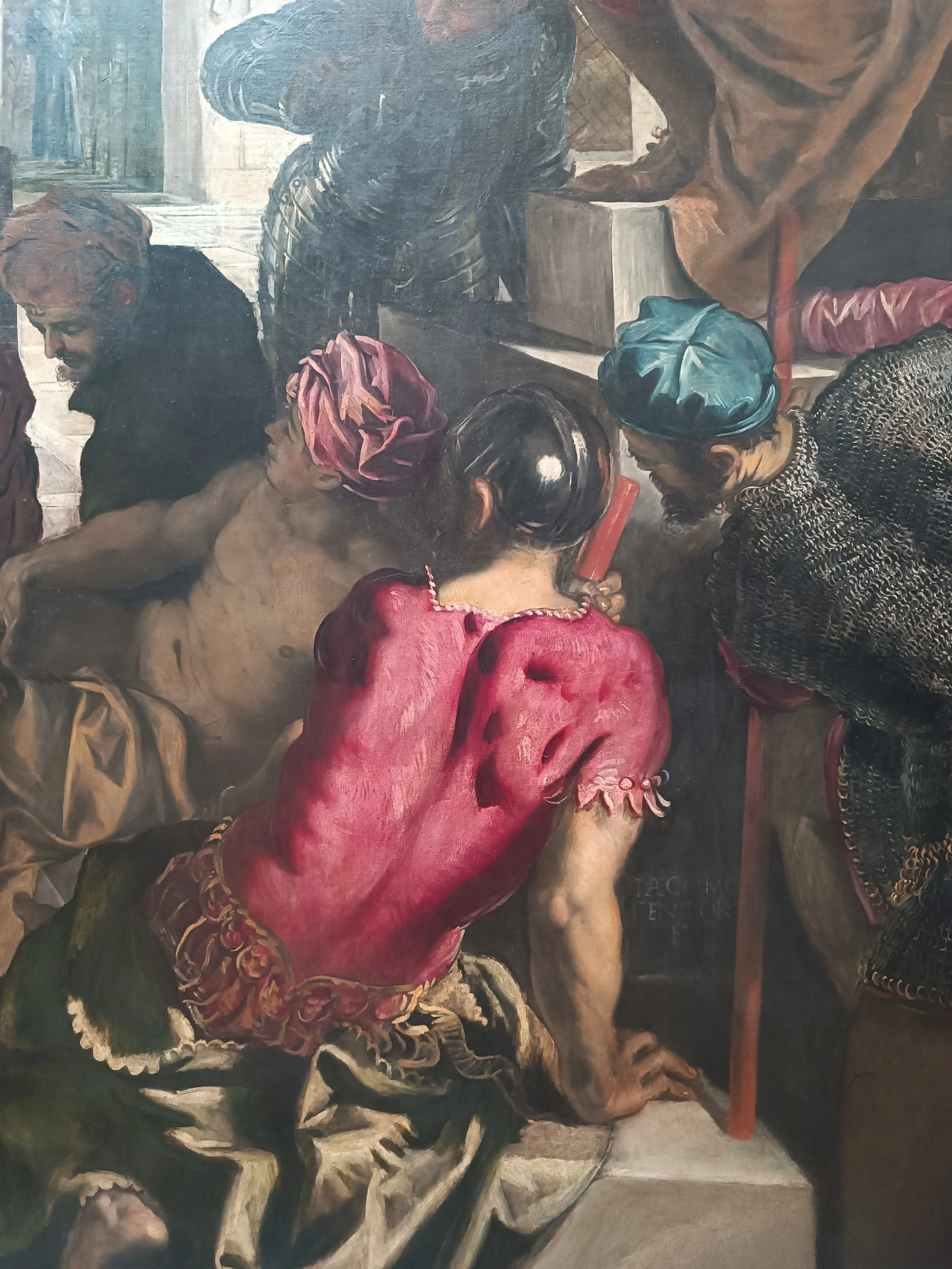
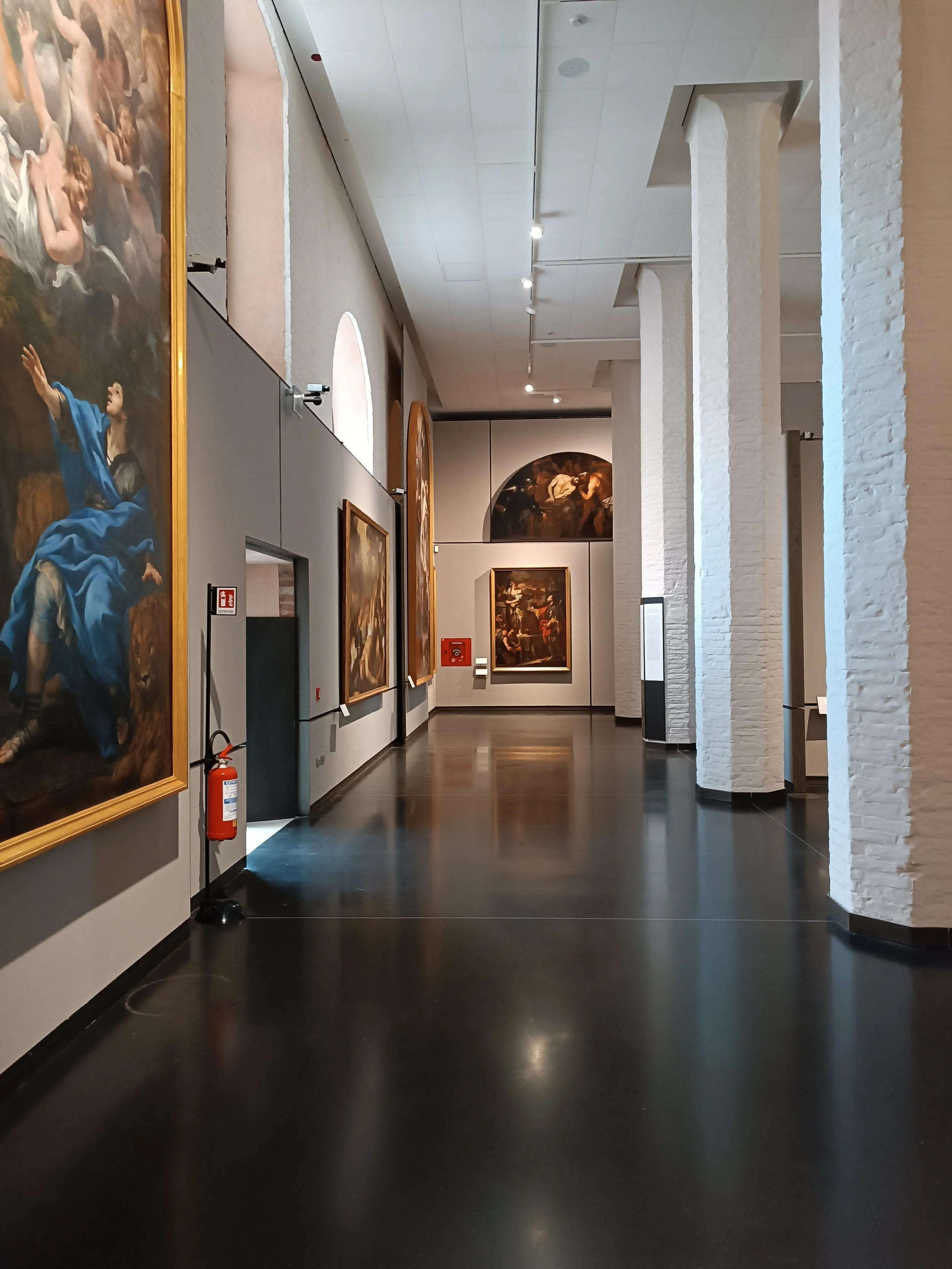
I also explore the art gallery, which presents works from the 14th to the 19th century. The paintings, the exhibition concept, and the museum itself – housed in a deconsecrated church – are all well worth seeing. Another particularly interesting observation: I notice a young man who is only taking photographs of sections of the artwork. I follow his example and, from then on, experiment with this new perspective.
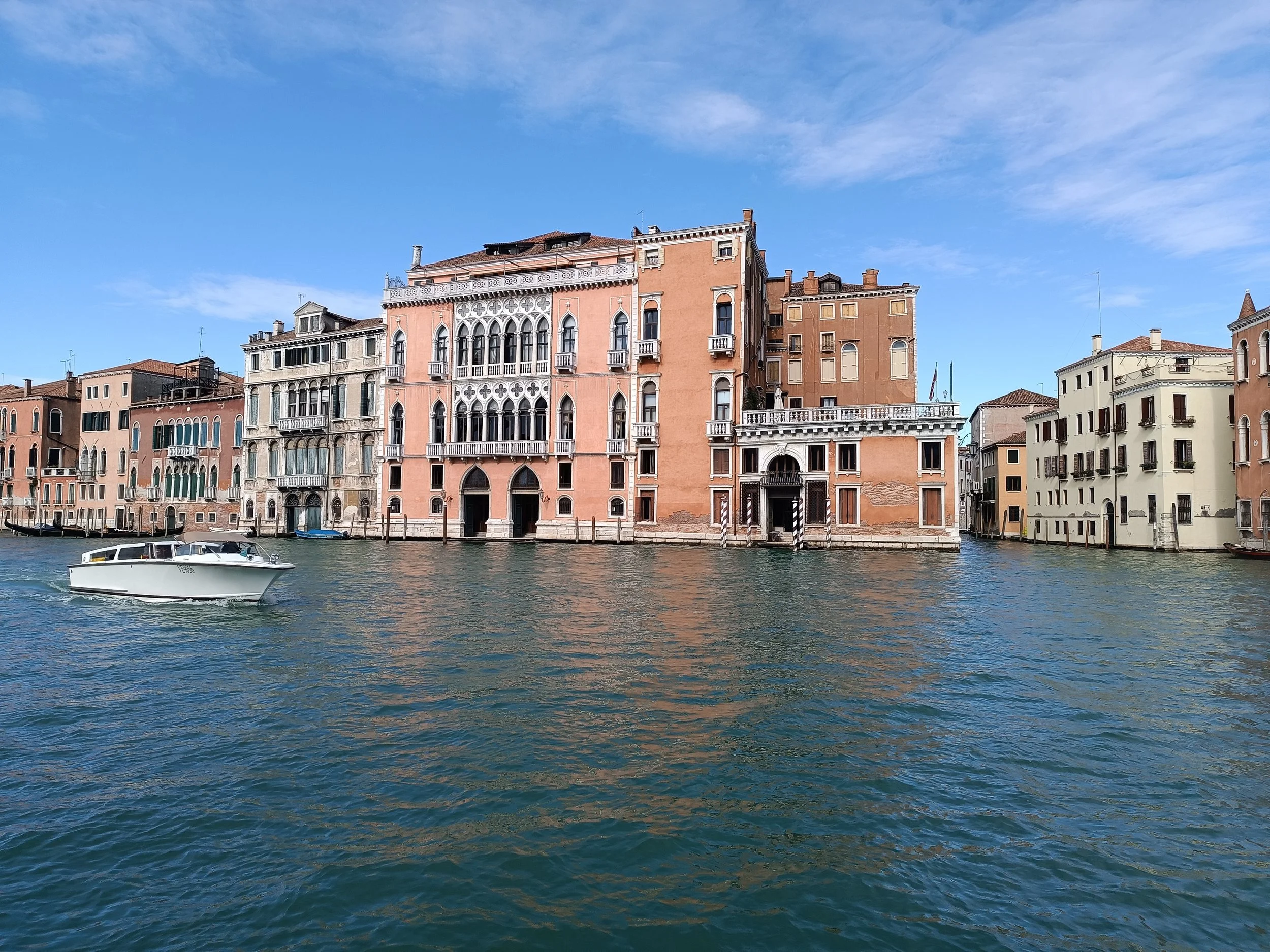
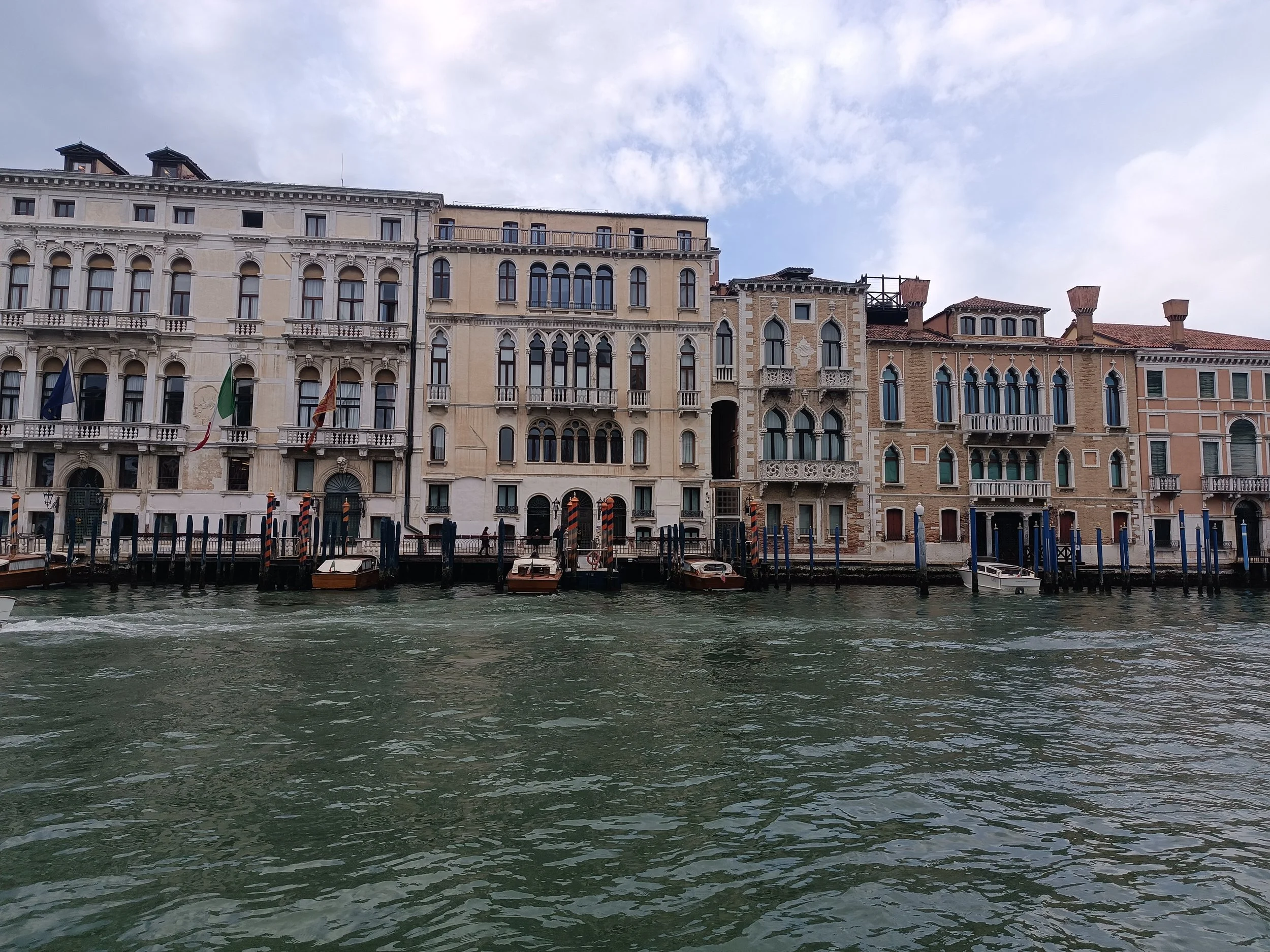
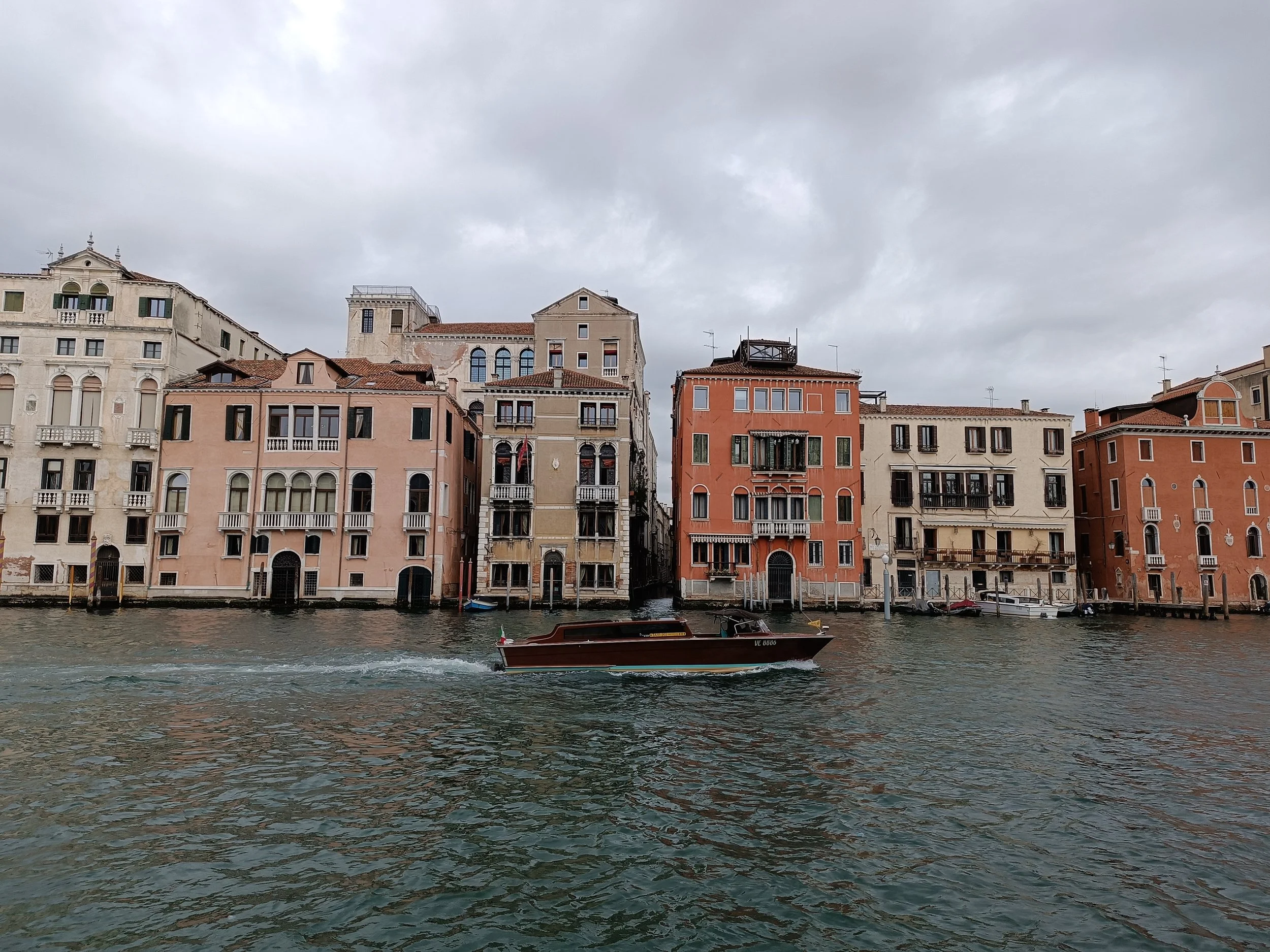
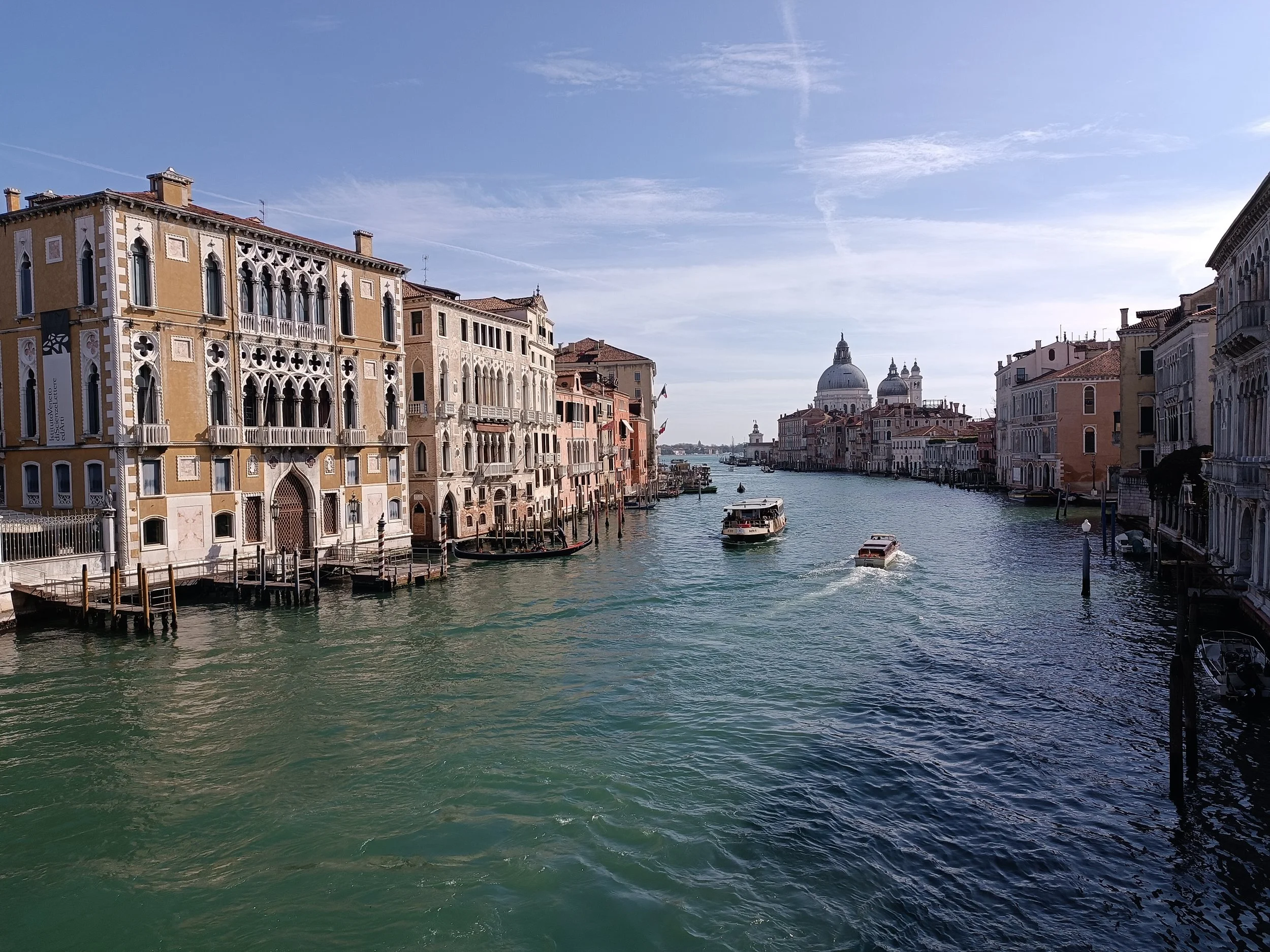
One day I afford a day ticket for the public transport ferry, 25 euros. I board Vaporetto line 1 near the railway station, manage to snag a seat at the bow of the boat and cruise along the Grand Canal, out towards the island of Lido. The journey takes about an hour and is more than just a form of transport. It’s an impressive sightseeing tour, showcasing the diversity of the local architecture in all its grandeur. A palazzo here, a casa there – now home to university buildings, art collections, administrative headquarters – I don’t know where to look first. In between, gondolas and goods deliveries.
The former wealth is reflected in the façades of the houses. One can only imagine the interiors from the outside. Gothic, late Gothic and Neo-Gothic countenances with pointed mullioned frames. Round arches that speak of the Romanesque and Byzantine periods. Loggias with columns made of marble. Friezes and flagpoles. The merchants’ houses are adorned with imposing main entrances facing the water; the trading houses feature loading docks, also elaborately designed as arcades. Elsewhere, doors extend right down to the water’s edge. Waves lap incessantly against them. Wooden gangways welcome visitors, and boats are moored to wooden posts.
How Venice Came to Be
The lagoon, with its islands, mudflats and sandbanks, was formed by sediment deposits from Alpine rivers and the tides of the Adriatic Sea. Initially inhospitable to humans, the marshy ground was gradually stabilised from the 5th century onwards. Starting with landfill at the edges of the islands, millions of tree trunks were later rammed into the mud, thus creating a stable foundation for building.
Fun Fact
The Rialto Bridge alone is said to rest on around 12,000 wooden piles.
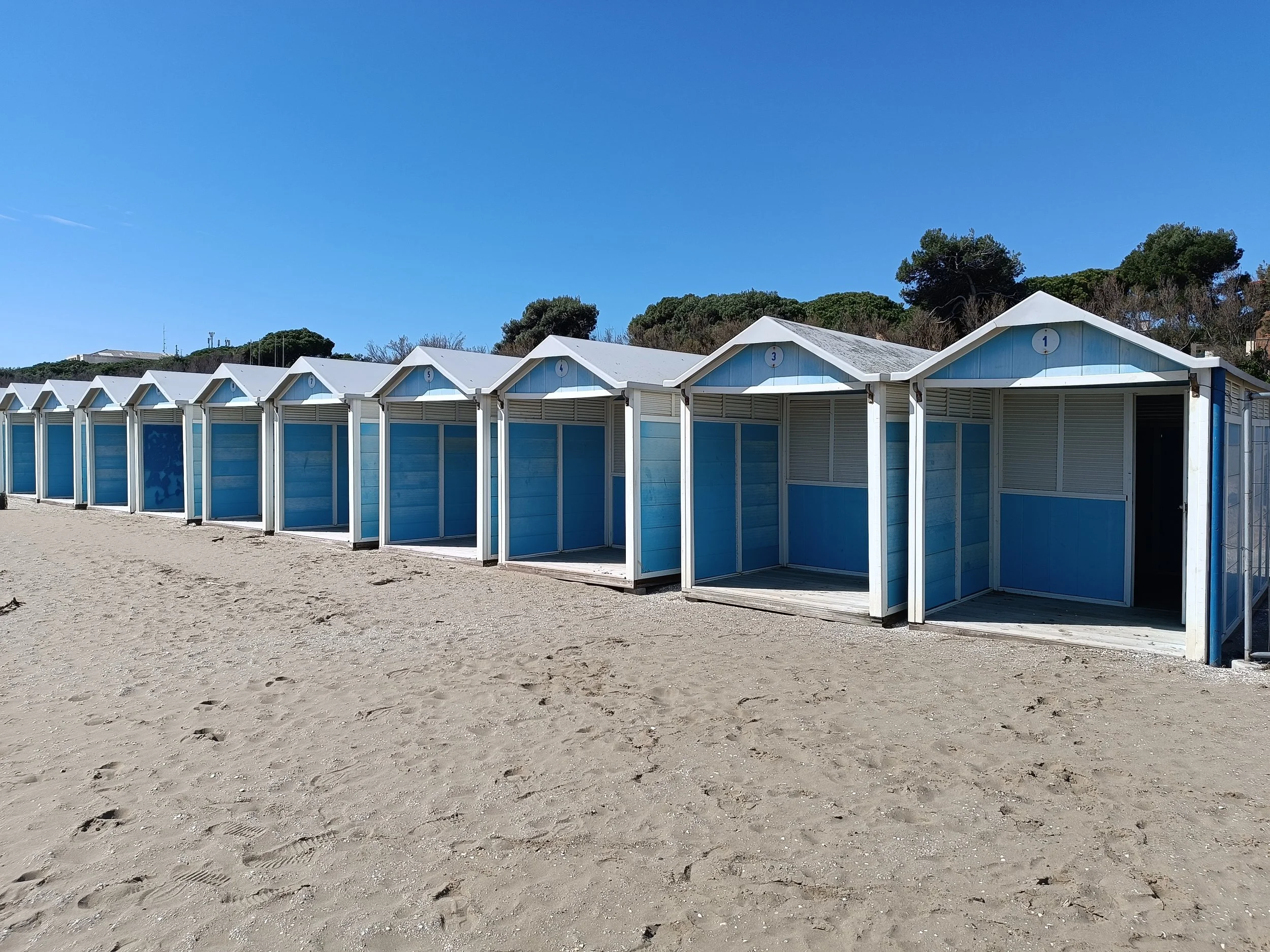
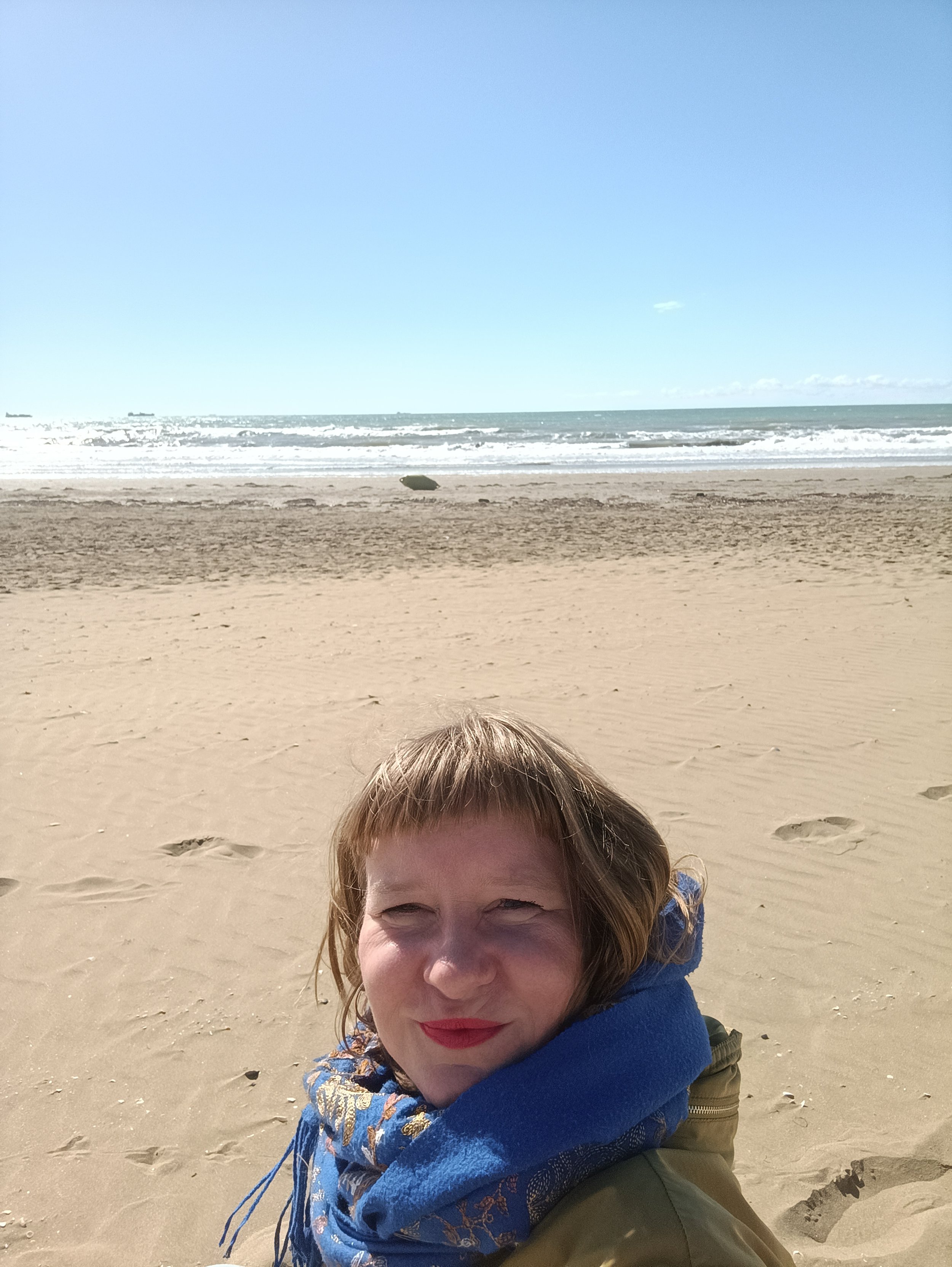
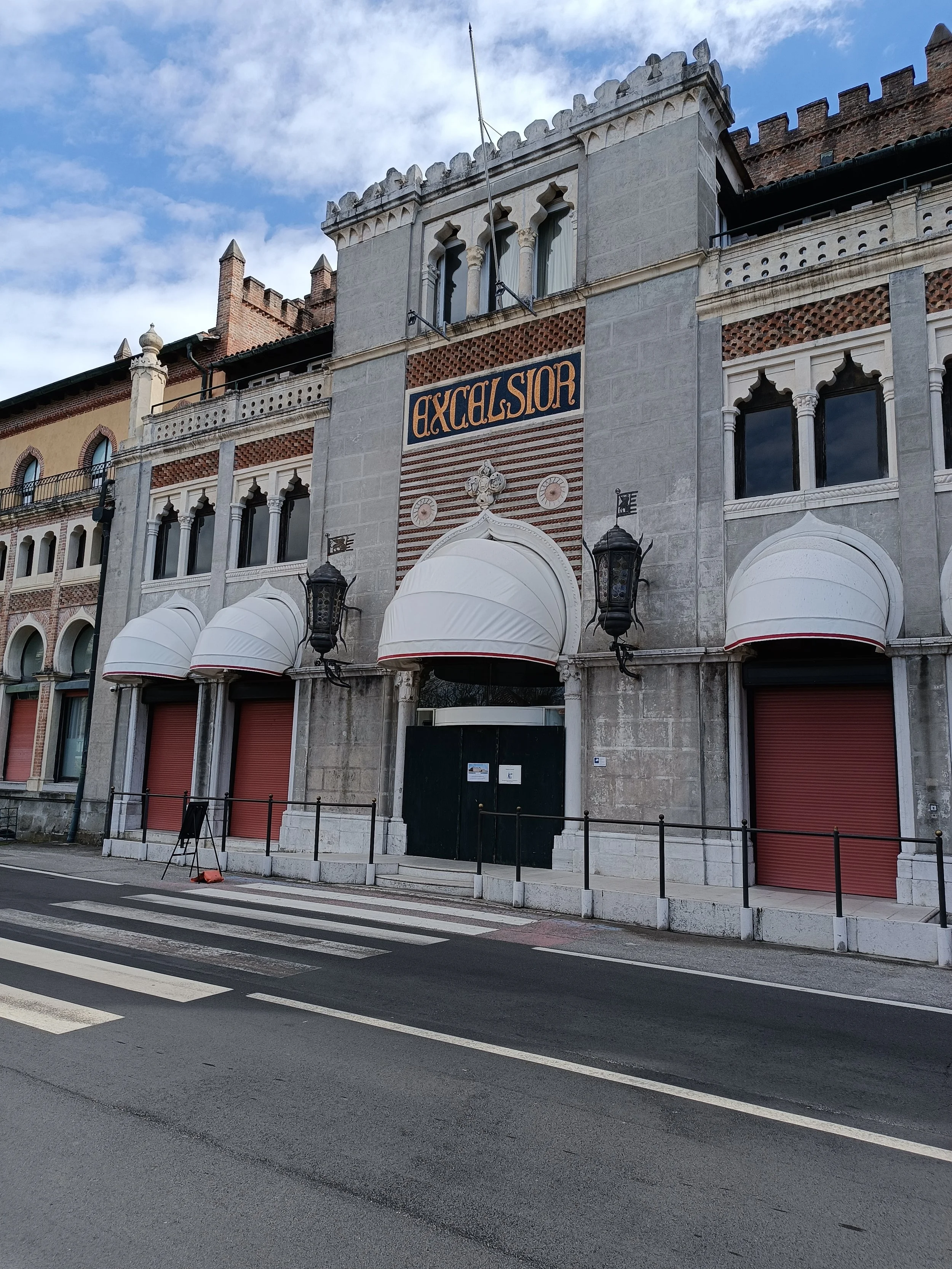
The Lido is one of the Venetian islands that separate the lagoon from the Adriatic Sea. I head straight for the sun-drenched beach. The water rushes in white foam; it is still cold. After a leisurely walk, I settle down. To my left is the Hotel des Bains, to my right the Excelsior, and behind me those beach cabins of great literary significance, from which Gustav von Aschenbach observed Tadzio, the young man – or rather, fathomed his every detail, taking him into his heart with powerful words. I am more than glad to have chosen Thomas Mann’s Death in Venice as my holiday read. The words from a bygone era caress my mind, leaving it melancholy at the transformation of all things mundane into the morbid, while my fingertips play with the “wax-yellow” sand.
My holiday’s over; it’s evening and I’m wandering about a bit. Ciao, ciao. All day long I’ve been seeing young people with laurel wreaths in their hair. Now they’ve gathered in Campo Santa Margherita. Lazing around in street cafés, hanging out in bars. One last cigarette. But the atmosphere’s too good, so I order one last farewell drink. An Aperol Spritz, of course – that’s what you do here. I sit down on a bench a little way off, watching life go by and questioning it. At the same time, I’m glad to be going home tomorrow and sad that I won’t be able to come back. Should I even have come here in the first place? Yes, no, perhaps. I’m torn.
Venice fascinates not only because of its past, but also because it is here that the urban-social debates of the present manifest themselves radically, and the question of how we answer them for our collective future becomes spatial. The media focus primarily on the day-trippers who stream into the city, clogging it, littering it – so they say – only to vanish back onto their cruise ships by evening and depart without leaving much of a lucrative impression.[4] But even tourists like me, who supposedly bolster the local economy by staying overnight, contribute to a lasting transformation in the urban fabric. As it stands, there are already more tourist beds than residents. A city degenerates into a museum, and those who remain must live without everyday infrastructure.[5] Couldn’t we put a stop to all this? Certainly. But this is where another factor enters the equation: there are, of course, those who profit from this arrangement, who use money and power from the mainland to preserve the status quo.[6]
Venice – thou beautiful, thou wise, thou time-honored city! The myth lives on, a spectacle of splendor and decay. And in the end, in true cosmopolitan fashion, the question remains: To whom does the city belong?
Interesting!
The word casino is derived from the Italian word casa, meaning “small house”. Originally, the term referred to the extremely private chambers of the Venetian nobility. There, people cheerfully indulged in the good life and found a respite from the stifling routine of aristocratic daily life – filled with conviviality, pleasure and gambling. In 1638, the first public casino opened in Venice; a few years later, there were already over a hundred. Today, there is only one left.
Recommendations (mostly in German)
Becht, Sabine / Talaron, Sven: Venedig. Michael Müller Verlag, Erlangen 2024
Distefano, Giovanni: Wie entstand Venedig? Aus dem Italienischen übersetzt von Ursula Sharma. Supernova Edizioni, Venezia Lido 2026
Funke, Cornelia: Der Herr der Diebe. Dressler Verlag, Hamburg 2021
Mann, Thomas: Der Tod in Venedig. S. Fischer Verlag, Frankfurt am Main 2025
Moireau, Fabrice (Paintings) / Howard, Deborah & Sammartini, Tudy (Texts): Venice sketchbook. Les Éditions du Pacifique, Paris 2023
Reski, Petra / Weingart Christopher: Die letzten Venezianer. Eine Stadt kämpft ums Überleben. Deutschlandfunk (Feature), 22. April 2025
unter: https://www.hoerspielundfeature.de/die-letzten-venezianer-100.htmlVenedig. Die Gründung der legendären Lagunenstadt. Deutschlandfunk Nova (Eine Stunde History), 27. März 2026
unter: https://www.deutschlandfunknova.de/beitrag/venedig-die-gruendung-der-legendaeren-lagunenstadt
____
[1] The Republic of Venice was known by the epithet: La Serenissima (= The Most Serene).
[2] Interestingly, these figures vary depending on the source. These details are taken from my travel guide; see Recommendations.
[3] “A door will open soon; I know it. To be precise, I can see it, over there, where the mist is slowly lifting. It is made of wood and painted green – opal green. I built it myself, with my last ounce of strength, and fitted a brass lion-headed door knocker in the centre. Does a new path now await me on the other side?”
Köhler, Susanne: Don’t get lost. BoD, Hamburg 2025, p. 124.
[4] Although a ban has been in place since 2021 prohibiting ships over 180 meters in length or 25,000 GT from entering the St. Mark’s Basin and its adjacent waterways, it is far from a comprehensive solution. Smaller ships are still permitted to enter the lagoon, whilst the ocean giants are diverted to the industrial port on the city’s outskirts. Similarly, the entry fee for day-trippers introduced in 2024 has failed to achieve the desired effect: in 2026, it generated well over 5 million euros but failed to reduce tourist crowds. Discussions are therefore underway regarding, for 2027, an increase in the fee and an extension of the period during which it is charged.
[5] In 1950, over 170,000 people still lived in Venice’s historic centre; by the end of 2025, that number had fallen to fewer than 50,000. There are many reasons for this: rising housing costs, holiday rentals and the sale of real estate to investors. The consequences for the remaining residents are devastating. As people leave, so too do medical care, social services and shops selling everyday essentials.
[6] There are conflicts of interest between the mainland, the islands and the historic centre. Today, only around 20 per cent of Venetians still live in the historic centre – whilst investment and political decisions are often directed from the mainlan
